Unlock Athos Pro Version
Customer problems
Irrelevant notifications: 10% of uninstalls were driven by frustration with excessive, non-contextual in-app messages (violating principle of relevance).
License management friction: Activation lagged at 8% as licenses could only be managed online.
Business Goals
Cross-sell promotions: Execute effectively across the app to drive engagement and increase MAU (Monthly Active Users).
Contextual sales: Deliver in-app sales messaging at the right time to lift LTV (Life time value) from $0.25.
Increase License activation rate: Improve activation rate beyond the current 8%.
Scope & Constraints
Scope included all CCleaner Customers (Free, Professional, Business and Technical)
Narrow timelines - 1 month to release.
Impact & Success Metrics
8 weeks post-launch
• A design that improved user activation and enabled the business to adapt more quickly; demonstrated through Account Menu's role in the Scheduler project (featured in this portfolio).
15%
65%
2
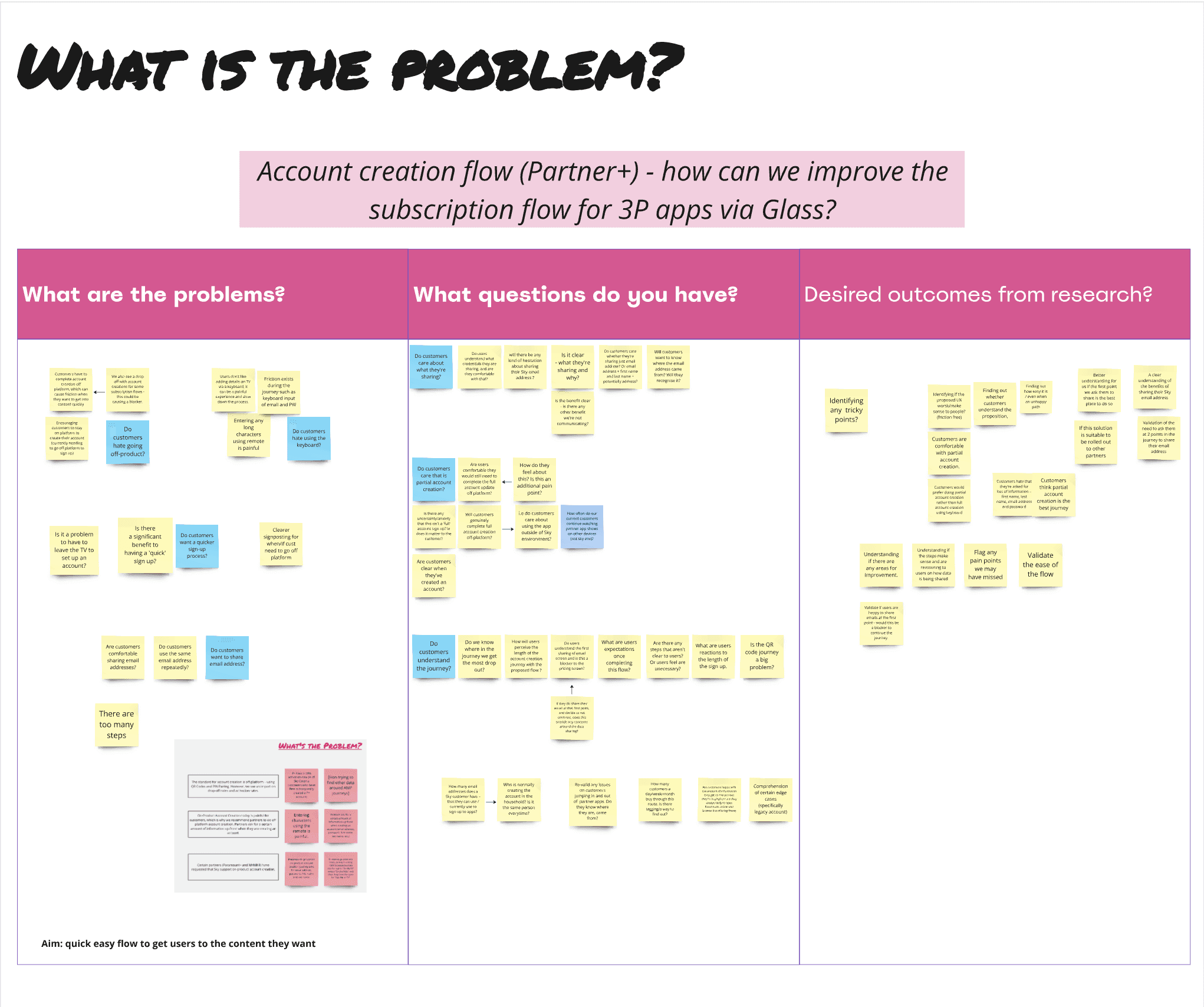
Based on this, the recommendation from Research was to also test Proposal 2 along with Proposal 1 to test our assumptions.
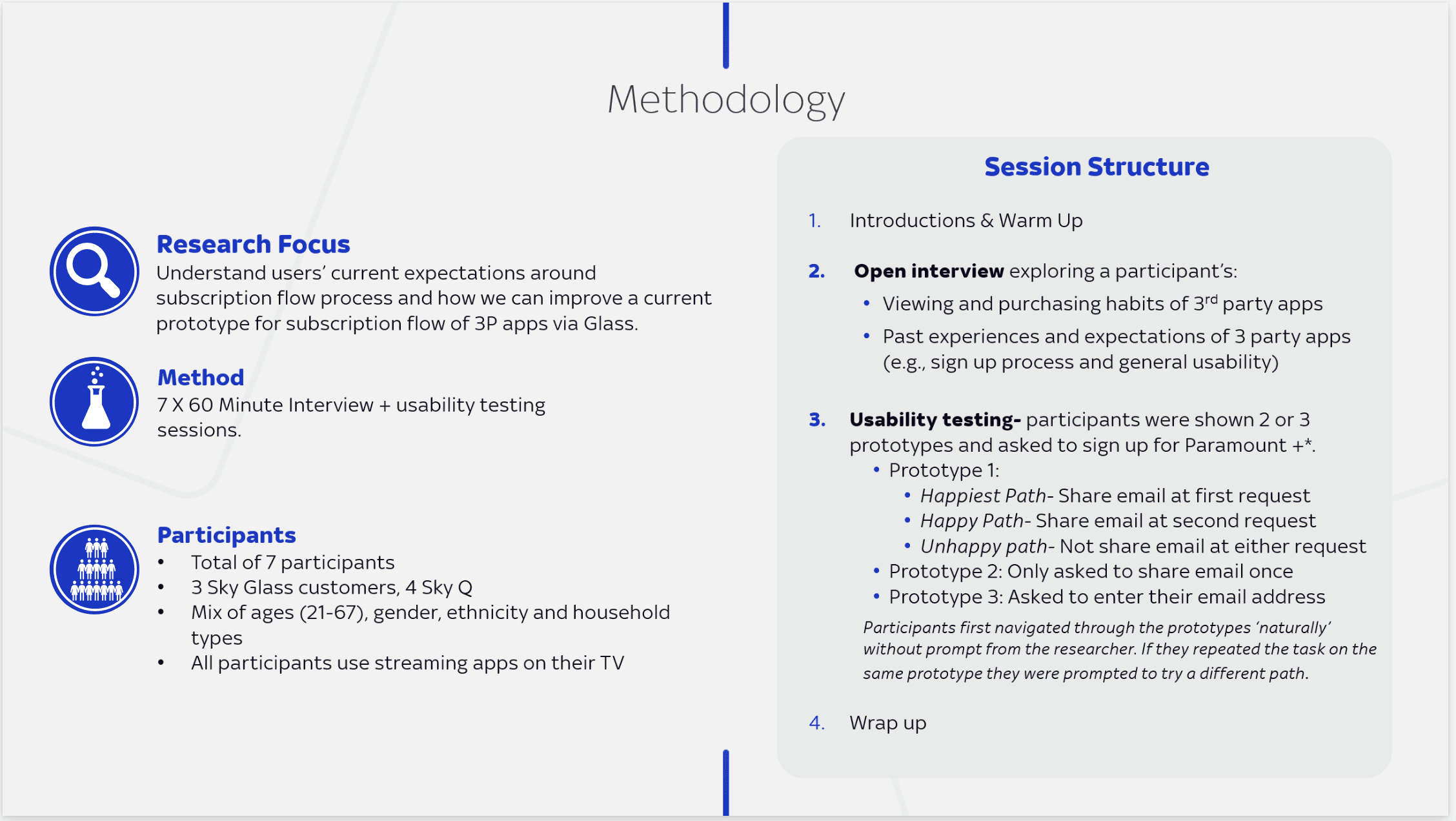
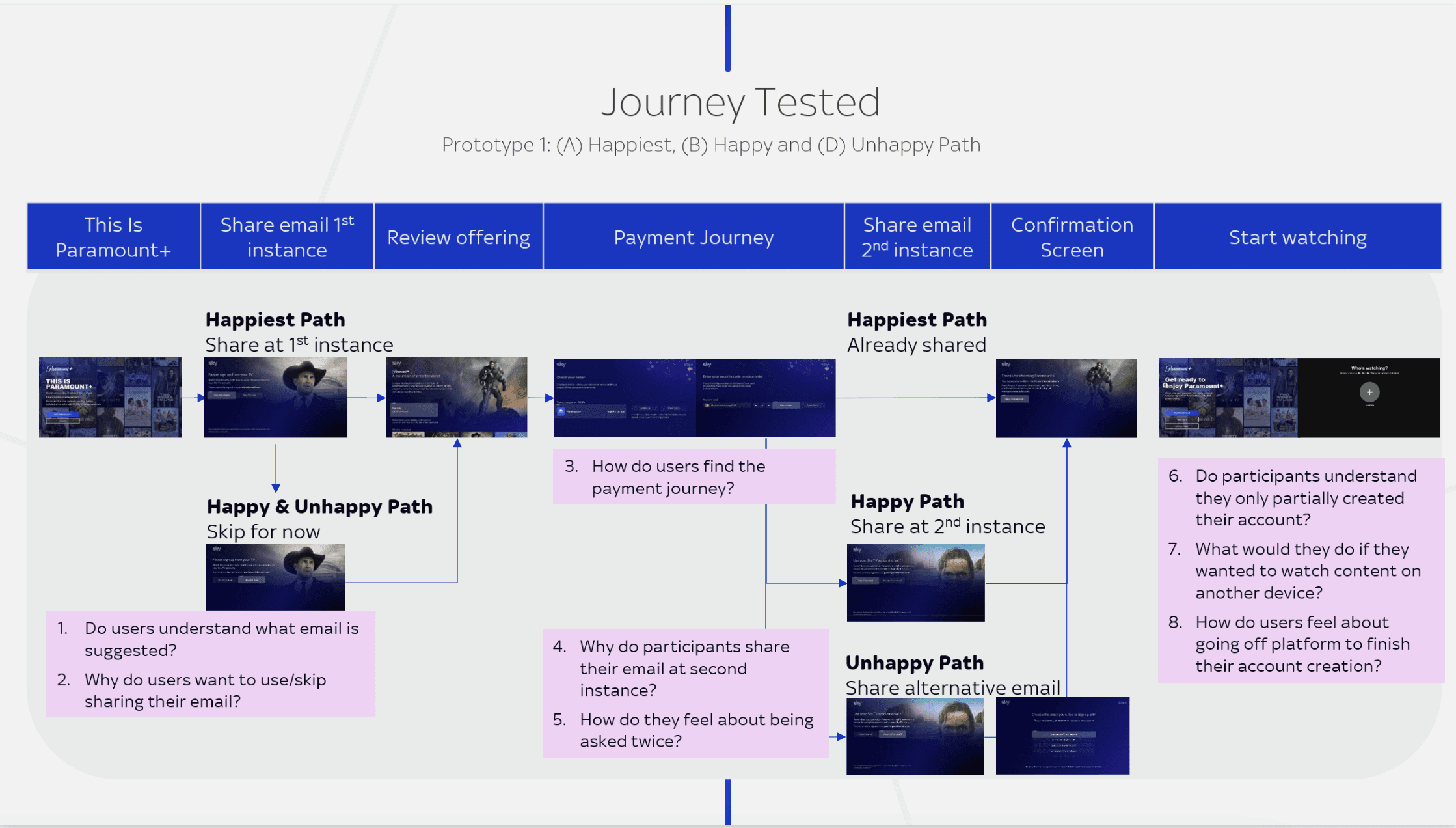
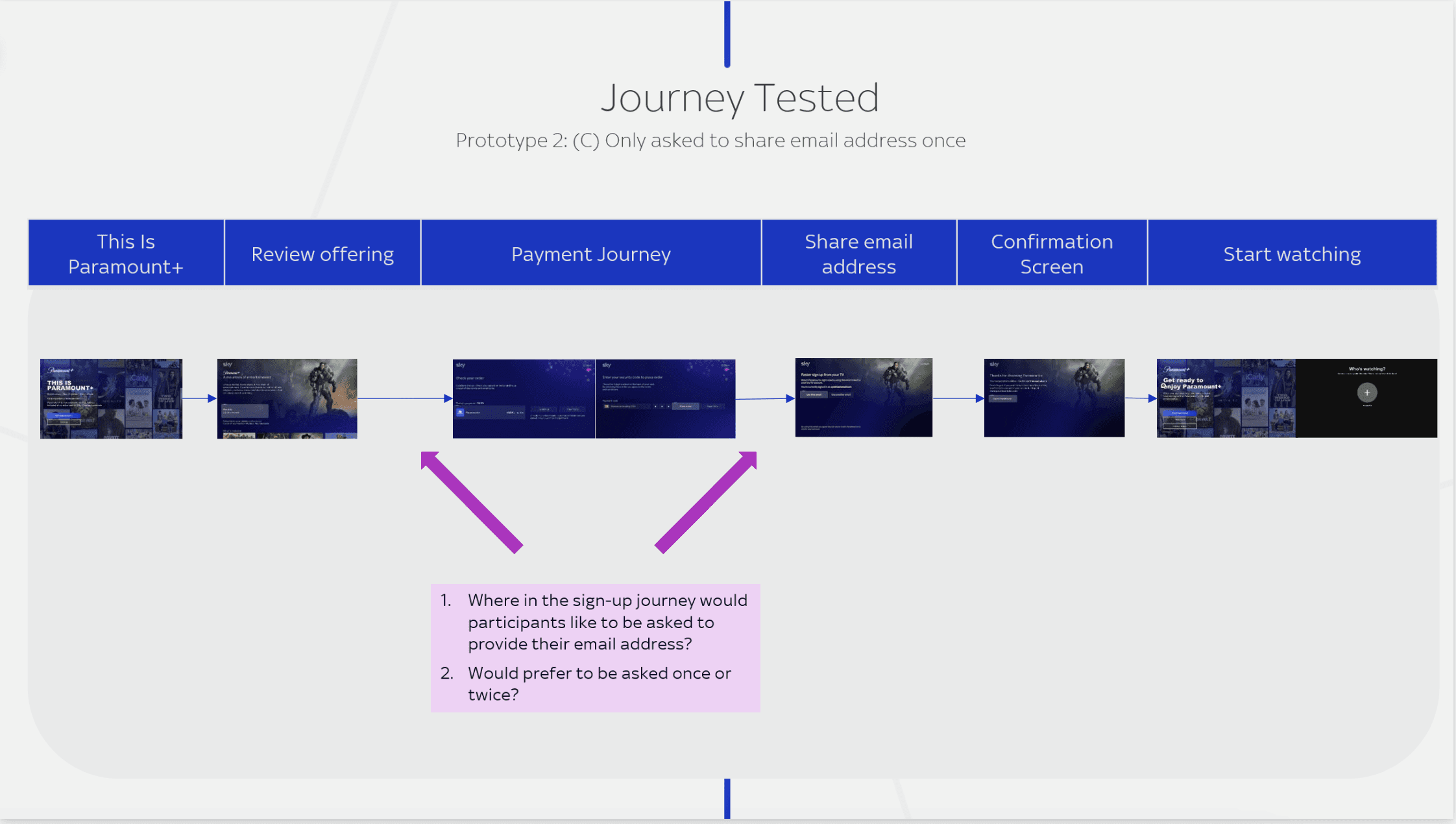
Executive summary across both journeys
• Account clarity was low: Participants were unsure if they were "signed in" to Sky or Paramount+.
• Most understood that the email came from their Sky account, but some didn't realise they'd still need to set a password for non-TV access.
• Participants preferred to share their email after reviewing the offer but before payment.
• There was a clear need to separate the purchase journey from account creation, both in flow and messaging.
• Reactions to a 2nd email prompt were mixed (some appreciated the confirmation, others found it repetitive).
🚨New Requirement Alert🚨
Post-testing, Paramount+'s legal team mandated an extra screen before content access to manage the account creation process.
We had already addressed this with carefully crafted copy, but I co-facilitated a workshop with the Product Manager to align on integrating the new screen while incorporating testing insights.
Balancing user insights with business constraints
Paramount+ were legally obliged to include this screen after a customer has consented to sharing their email address (screen on the left).
We had already managed this by presenting this success screen to the customer after they consent to sharing their email address (screen on the right) There is a duplication of messaging across both screens.
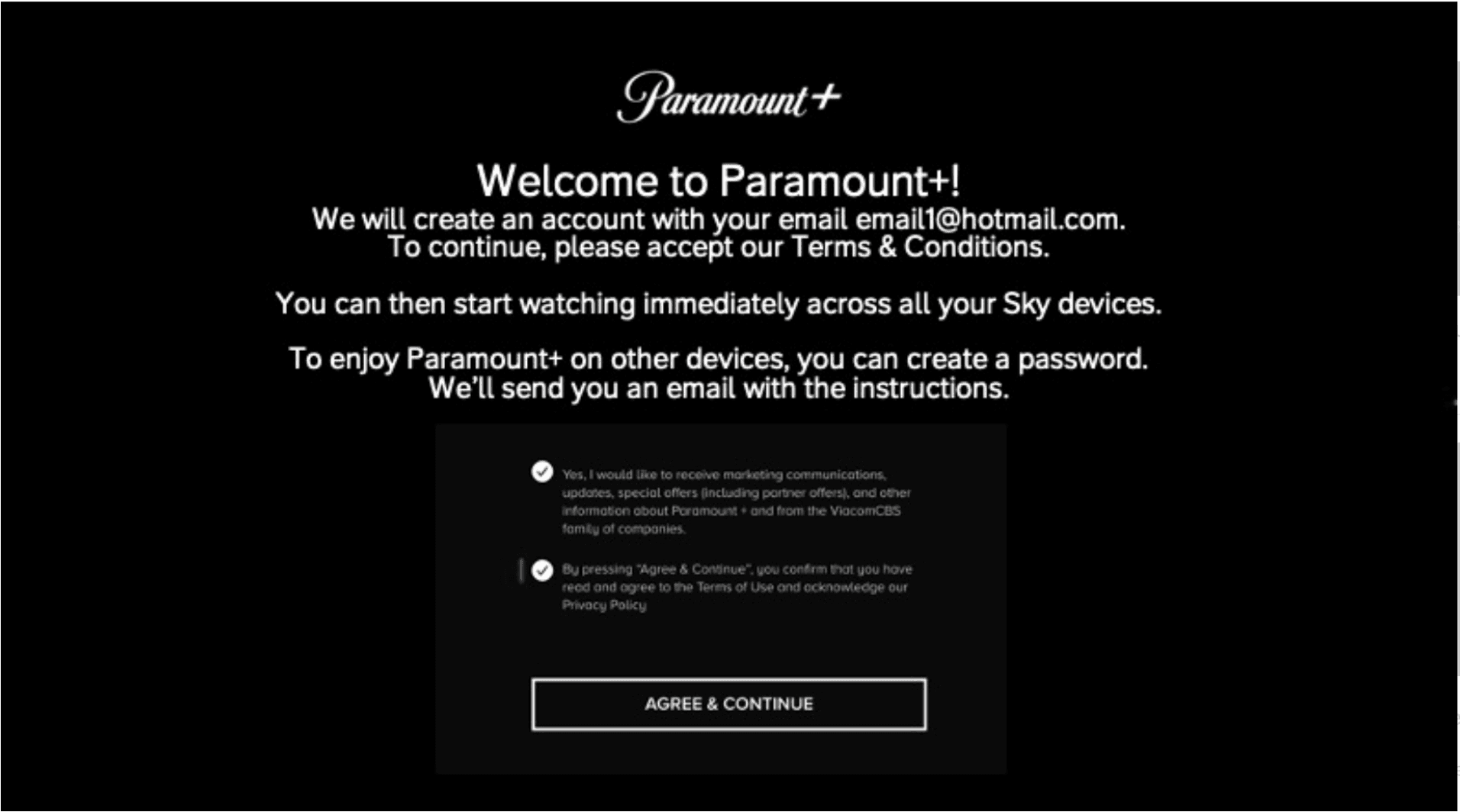
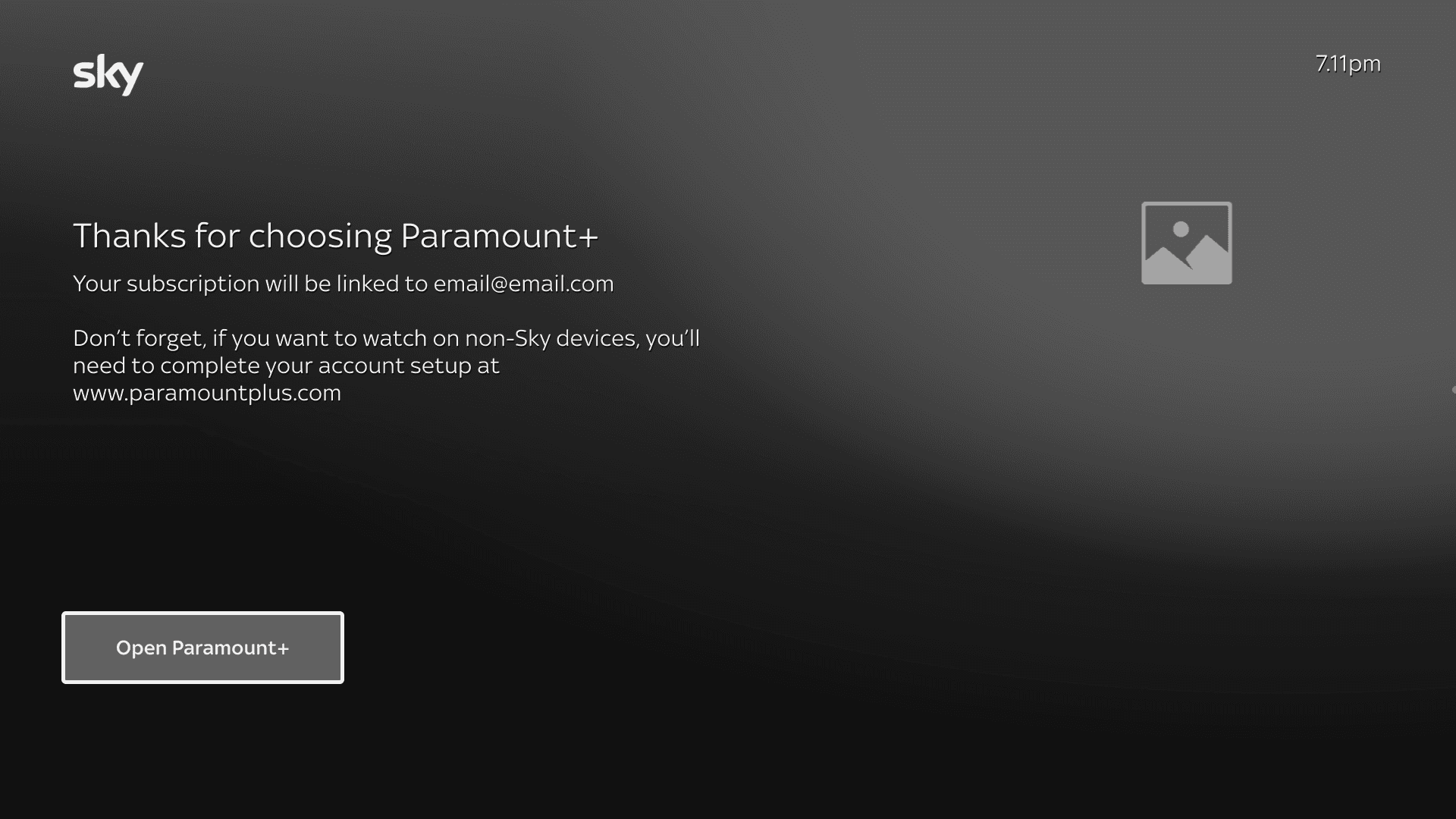
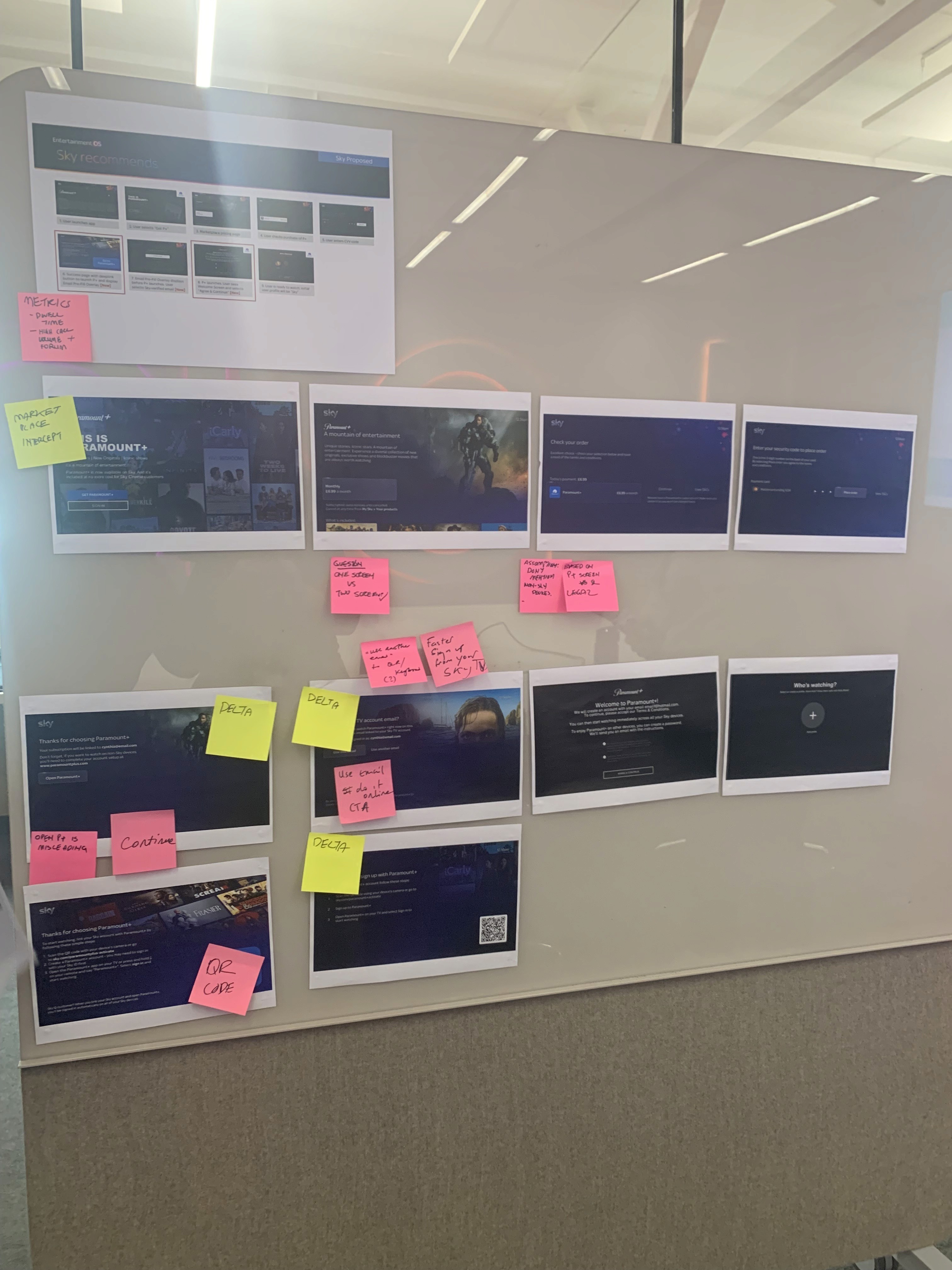
The post-testing workshop brought together Product, Design, Research and Copy (Engineering were unavailable) for a cross-disciplinary review.
Together, we identified potential changes to incorporate both the research insights and the newly mandated Paramount+ screen.
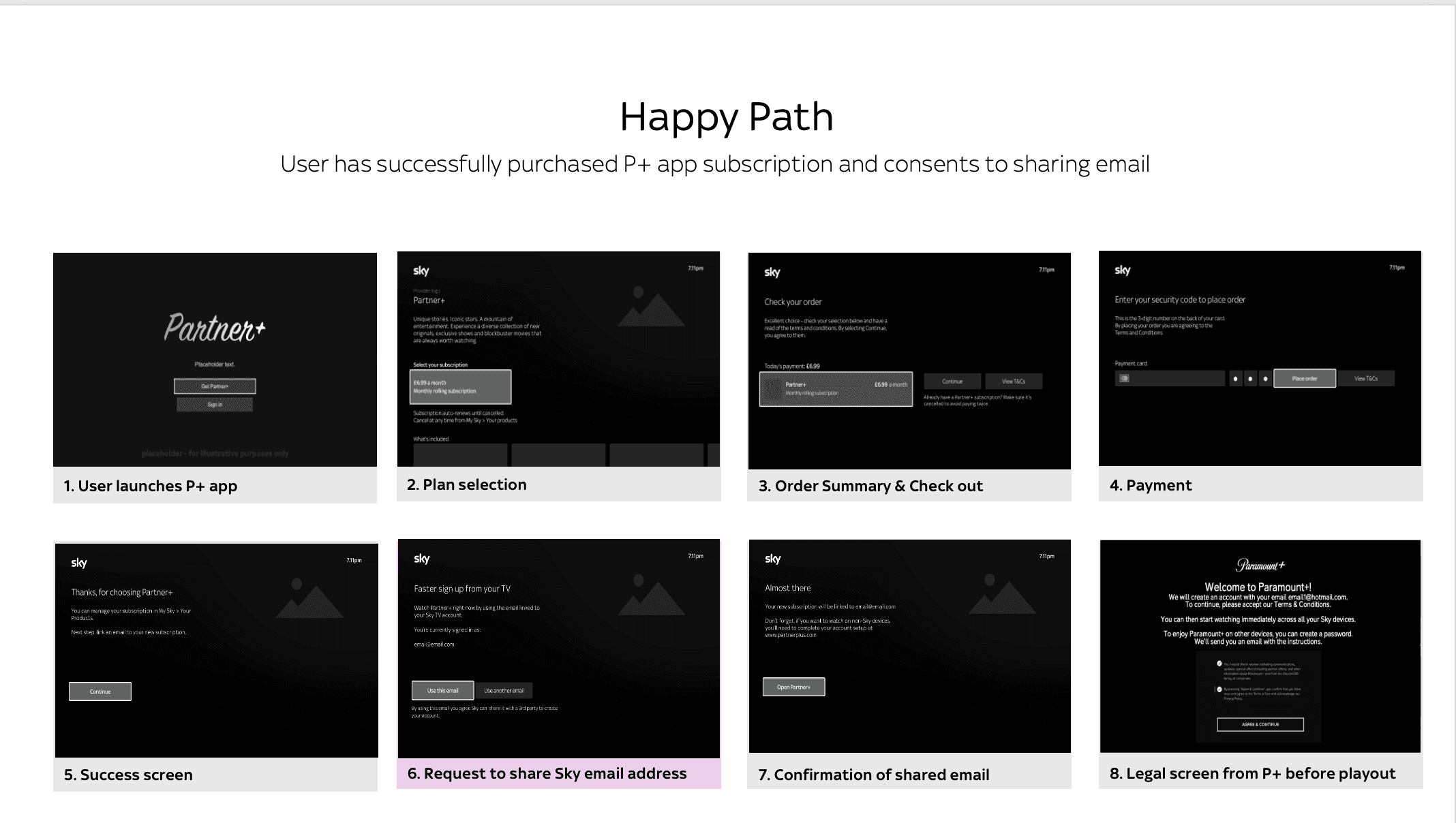
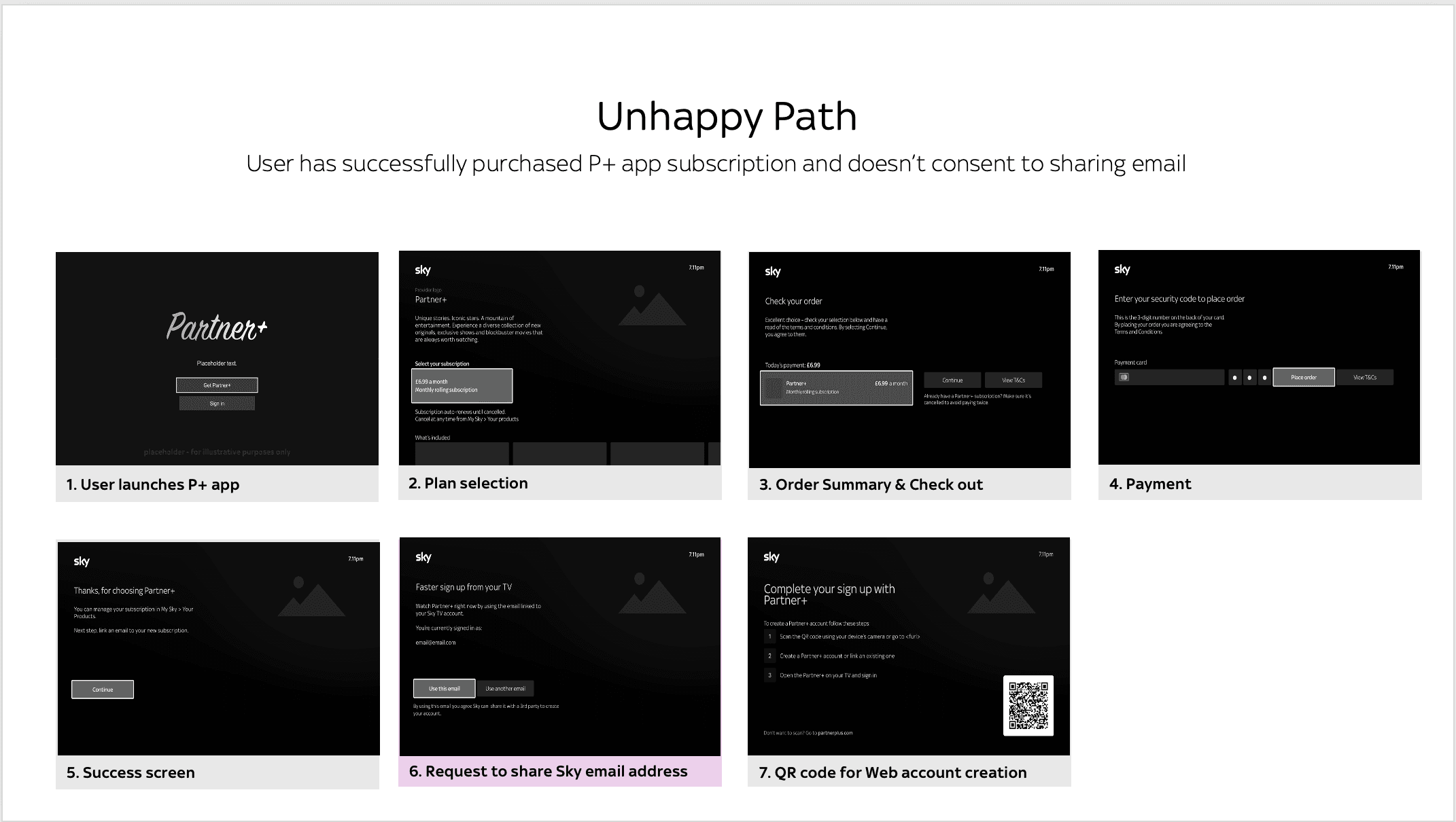
Participants preferred sharing their email after reviewing plans but before payment, and wanted a clearer separation between purchase and account creation.
To balance this with Paramount’s new legal screen, we agreed to reposition the account creation prompt post-purchase, creating a more contextual flow aligned with user need for clarity.
Beyond Partial Account - Some future thinking
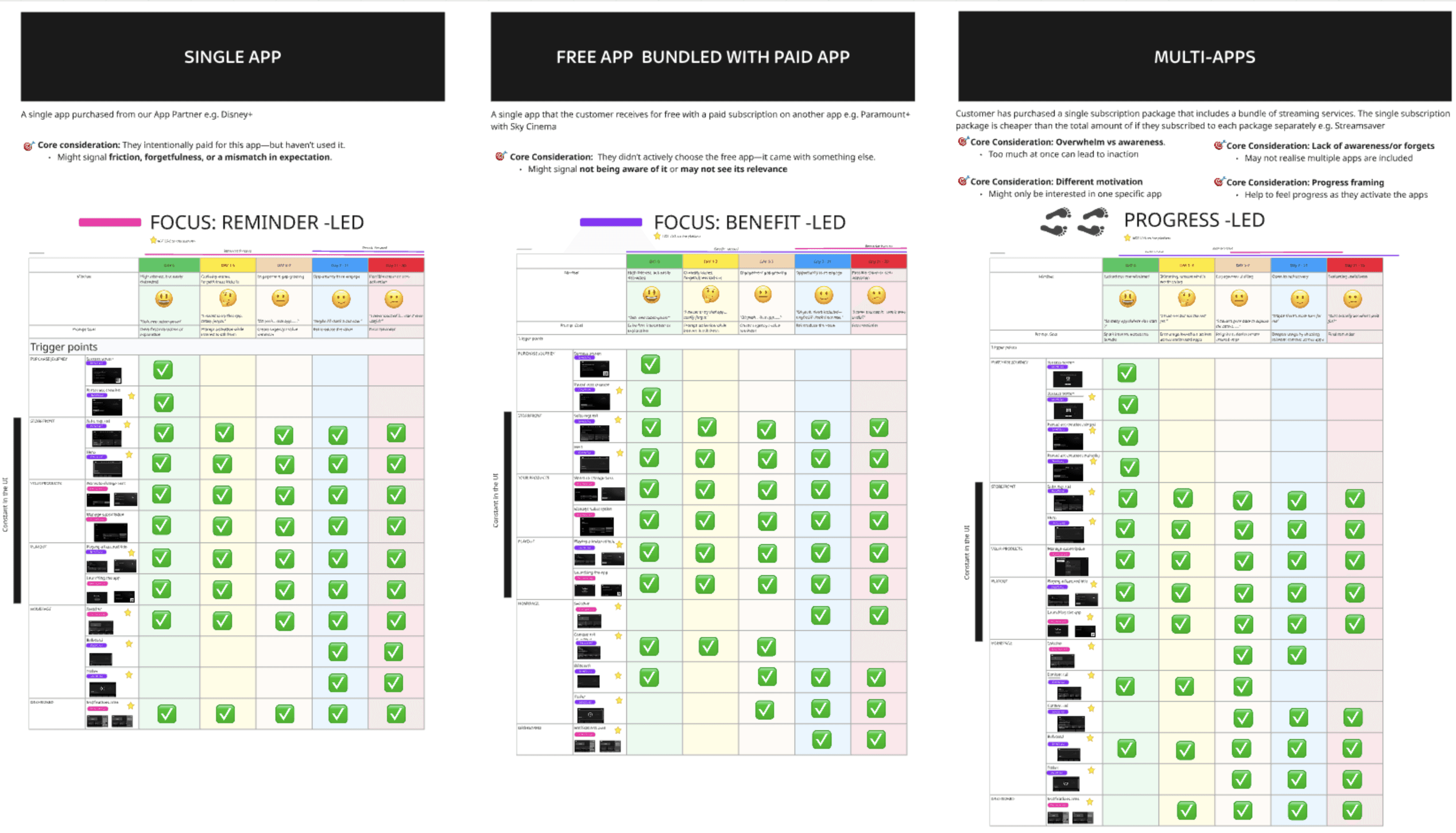
Activation Framework
While this project streamlined activation at purchase, the greater opportunity lies in sustaining engagement post-purchase.
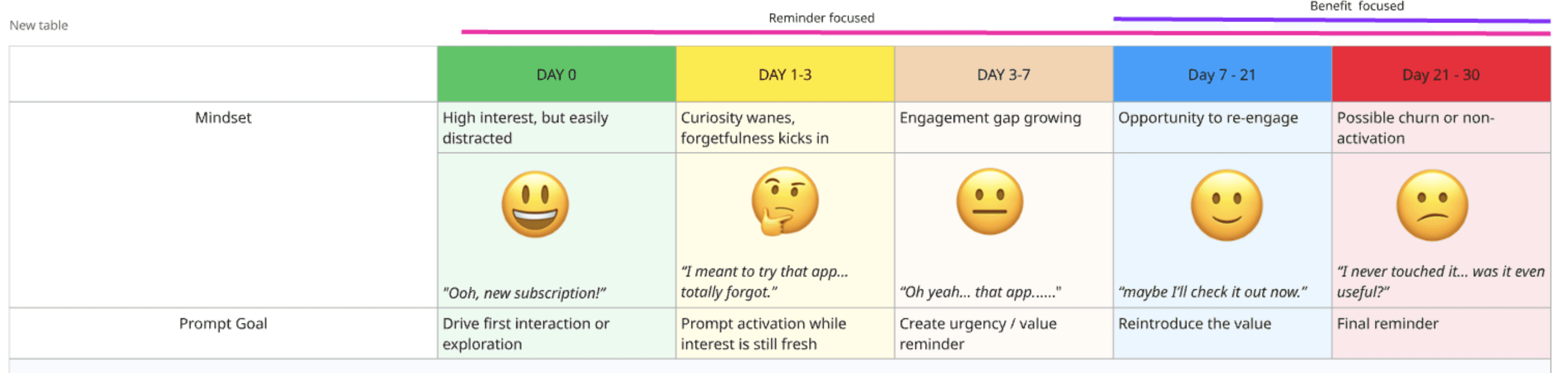
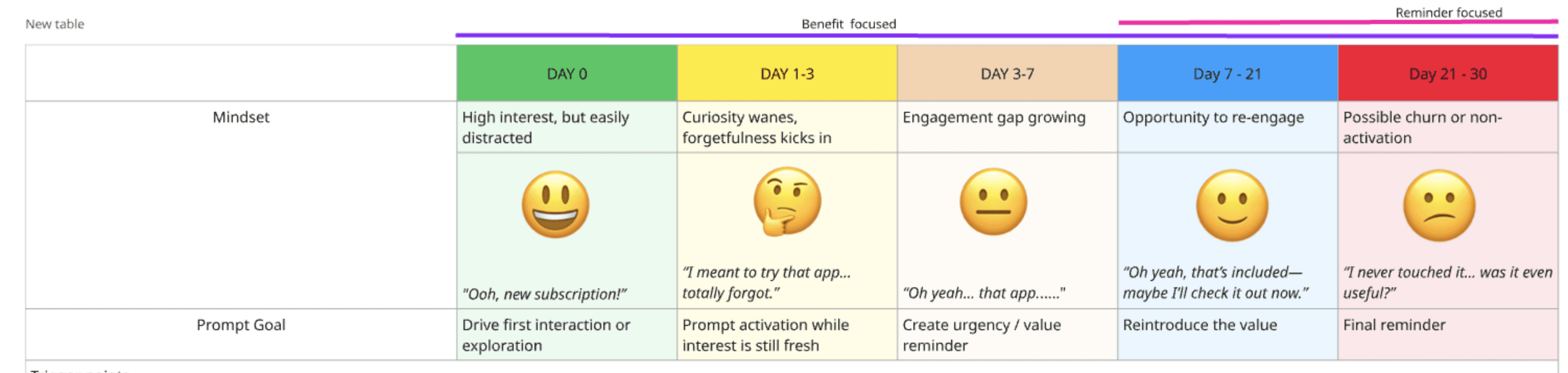
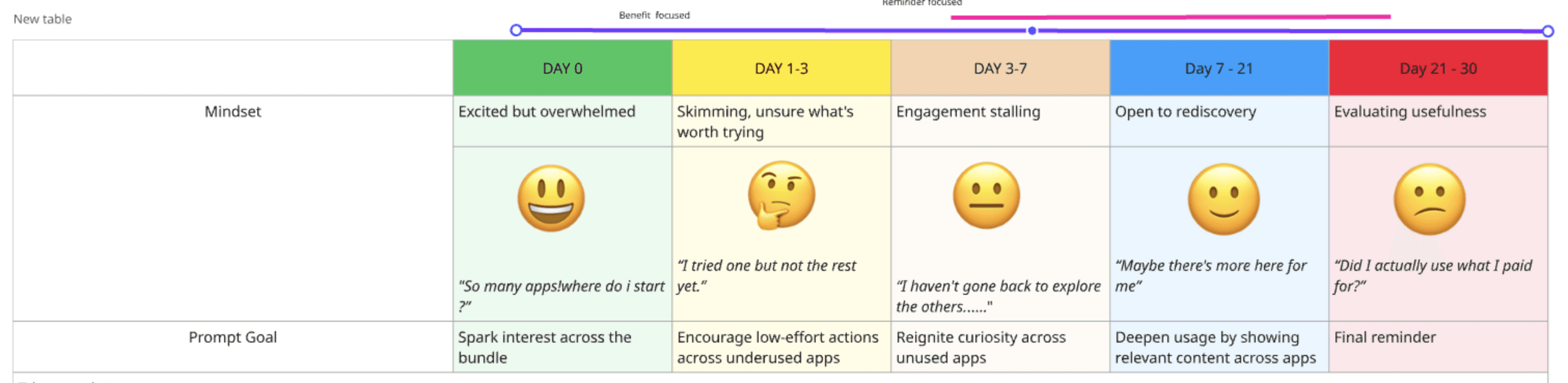
Delayed activation erodes perceived value by the customer and also retention, so I created a framework defining when, where, and how Sky could deliver supportive, action-oriented nudges to activate. I considered the first 30 days of non-activation.
Key Scenarios
• Single Paid App Activation
Context: A customer pays for a standalone partner app such as Hayu but may not activate due to friction, forgetfulness or mismatched expectations.
💡Future opportunity: Use timely, value-led prompts to highlight the unused benefit e.g., “Your Hayu subscription is ready - start streaming now.”
• Free Bundled App Activation
Context: A customer receives a free partner app as part of a TV Pack (e.g. Sky Cinema/Paramount+). They may not be aware of the free app or find it relevant.
💡Future opportunity: Reinforce ownership and missed value e.g., “Paramount+ is included in your pack - activate today and explore your library.”
• Multi-App Activation
Context: A customer purchases a bundle including multiple apps (e.g., TV Pack + 2 partner apps). Activation can feel overwhelming
💡Future opportunity: Reframe activation as progress driven and/or gamified e.g “Activate your apps and level up your experience.” reducing cognitive load and streamlining the process.
Design Considerations
•Timing: Balance immediate prompts (right after purchase) with delayed reminders (when usage hasn’t occurred).
•Framing: Use benefit-led language as well as reminder-led cues depending on context.
•Channels: Explore in-TV intercepts, My Sky app notifications, and email reinforcement to ensure consistency without overloading customers.
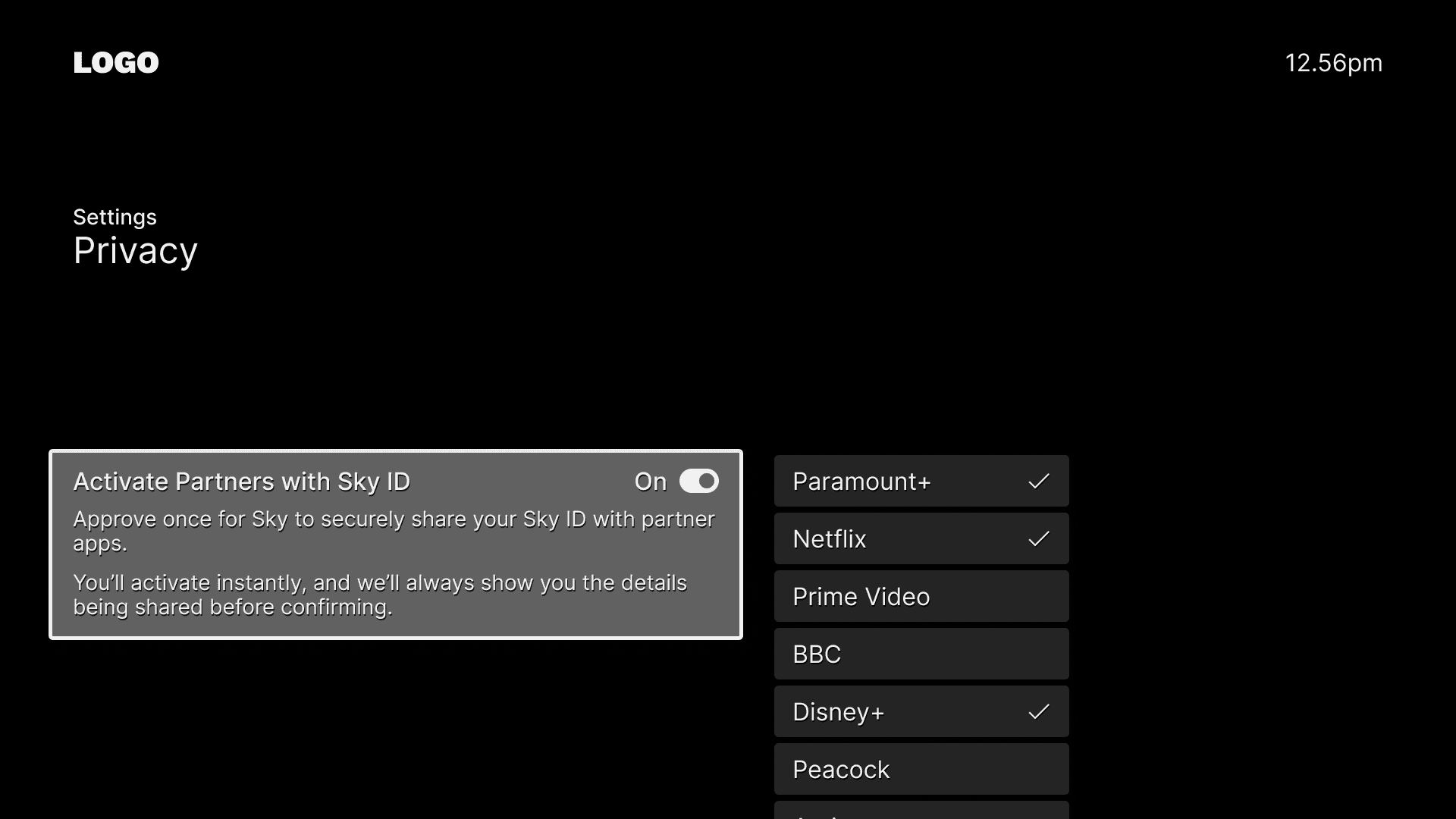
Blanket Approval Mechanism
I also saw an opportunity to let customers approve the use of their Sky ID details across multiple partner services so activation feels seamless.
Reflection
With limited Research capacity, I took a more active role in user research. This was a welcome opportunity that brought me closer to users and deepened my understanding of their needs. Tight timelines sharpened my stakeholder management, helping to maintain alignment and momentum throughout.
Key takeaways
🔑 Balancing internal teams and external partners (e.g. Paramount+) required transparent communication, which built trust and guided stakeholders to a unified outcome.
🔑Learned the importance of balancing user insights with business and legal constraints; designing flows that protect compliance without compromising user needs