Media
Optimising Subscription Journeys for Multi-tier Pricing
14 months
Customer problems
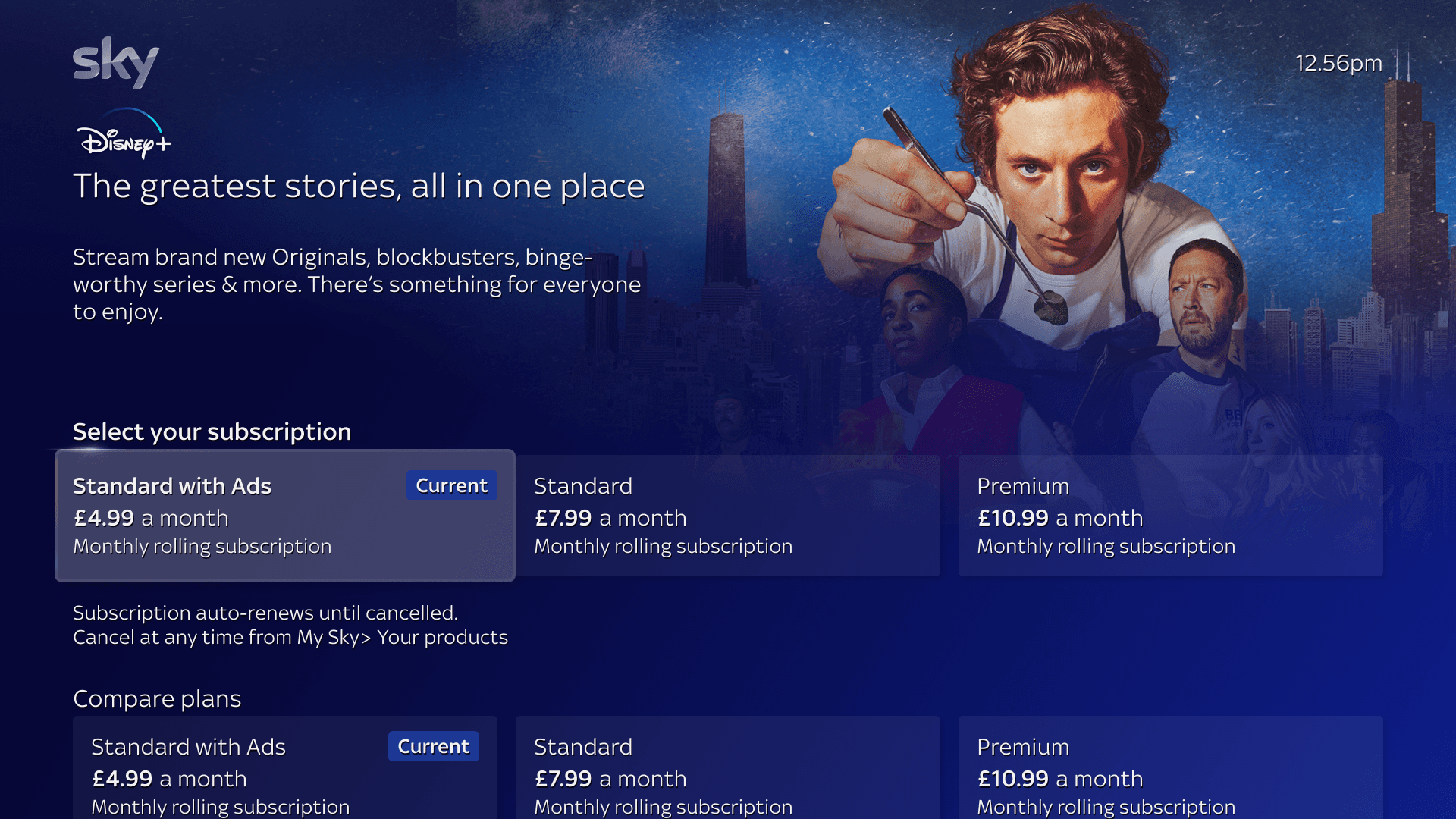
Fragmented pricing experience: customers could only view 1 pricing plan on TV, requiring a 2nd device to see alternatives. This introduced friction, risked undermining trust in the purchase journey (lack of transparency) and led to drop-offs and increased cancellations at renewal.
Business Goals
Onboard more partners: A successful launch with Disney+ served as a proof of concept to attract and onboard additional partners to the model.
Scope & Constraints
Prospect (New Customers), Existing and Sky Q Legacy customers
Templates: limited to pre-defined components within the TV Products Commerce system.
Contractual obligations: considerations around legal agreements with our partners.
TV design: Remote navigation (10ft experience) reduced comparison efficiency.
Impact & Success Metrics
12 weeks post-launch
• Beyond metrics, we also secured strong partner interest, validating scalability and strategic value.
16%
65%
2
The Process
Understanding the current experience
After purchase; customers are presented with a QR code which takes them to sky.com to create their partner account.
This introduces friction at a critical moment in the journey.
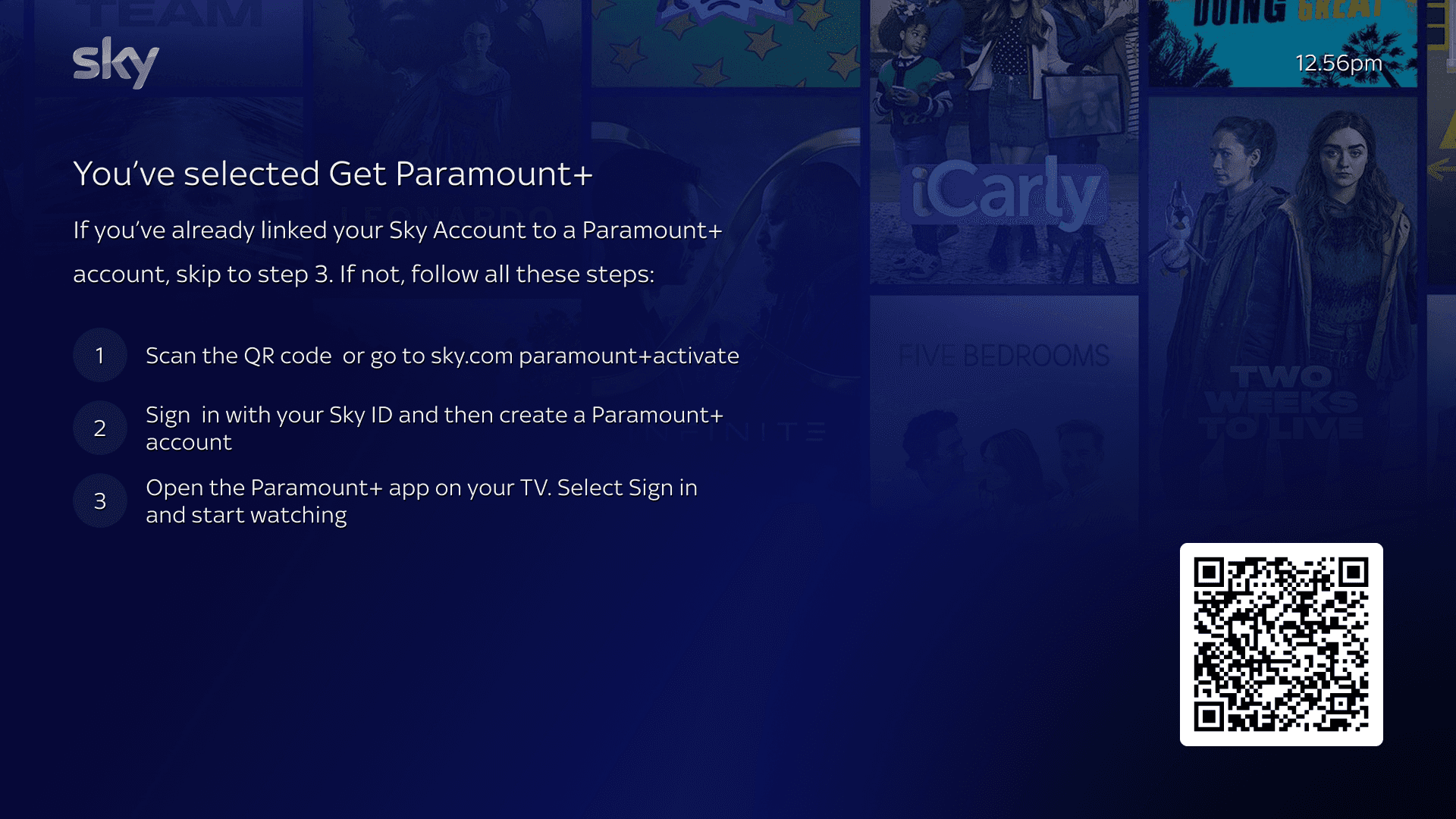
Once the account is created on sky.com, customers must return to the TV, manually locate the partner app (e.g. Paramount+) and sign in either via Web or on TV.
This adds unnecessary effort before content access.

Prior research revealed mismatches between user expectations and reality:
• Account creation took longer than expected (15 mins vs expected 5-10mins)
• Participants expected that "Sign-in on TV " meant they could only watch on TV (No, It meant they could watch on any device).
• Participants struggled to remember the account creation instructions on the QR code screen (they frequently had to refer back to the TV to check instructions).
These insights highlighted the need for a simplified flow that would align with our customer expectations.
How do others approach activation?
The friction point arises at partner app activation (e.g. Paramount+, Hayu), where users often leave Sky’s environment to complete setup.
I looked at a range of comparable platforms to map how and when they prompt customers to create accounts or activate partner subscriptions
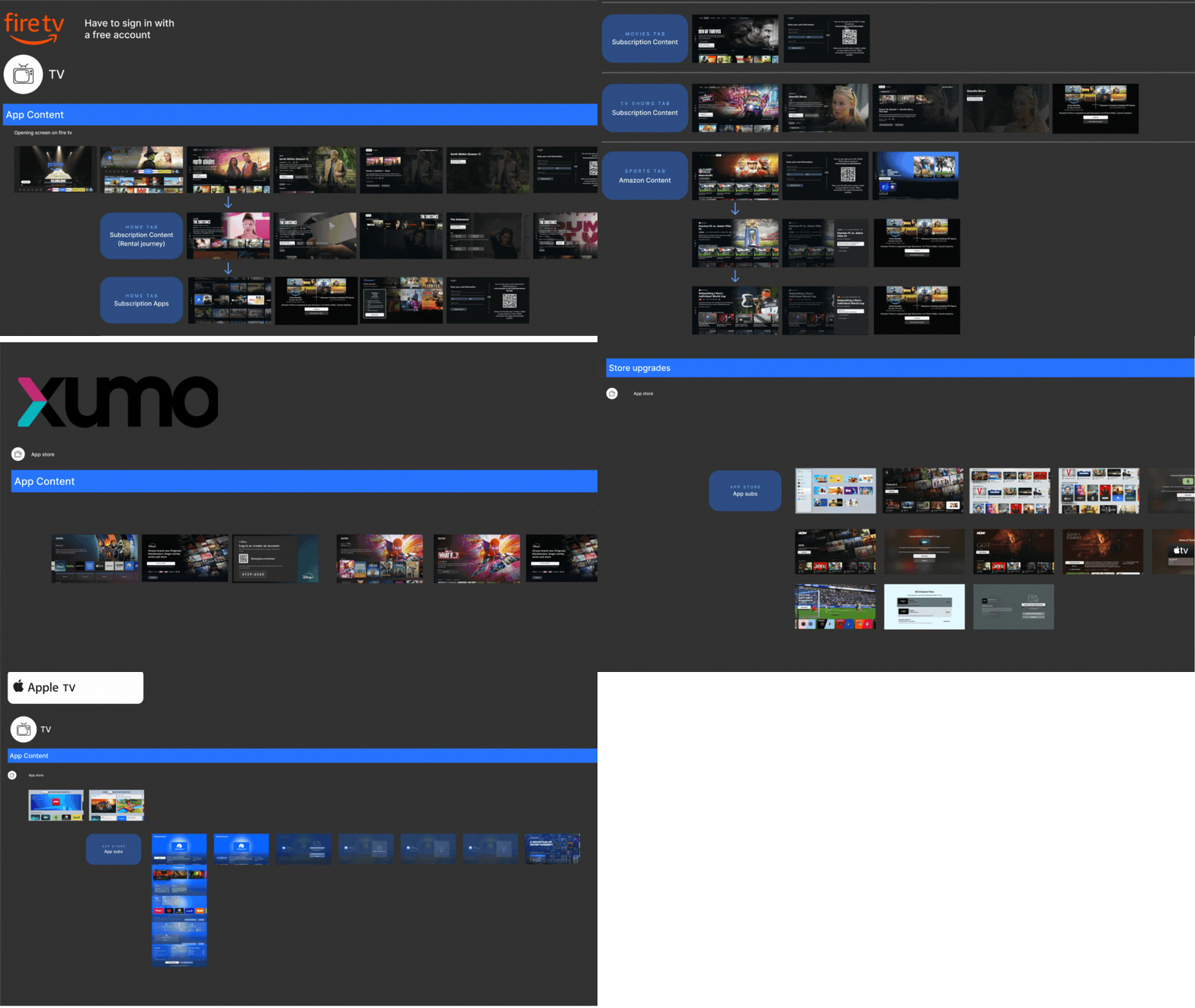
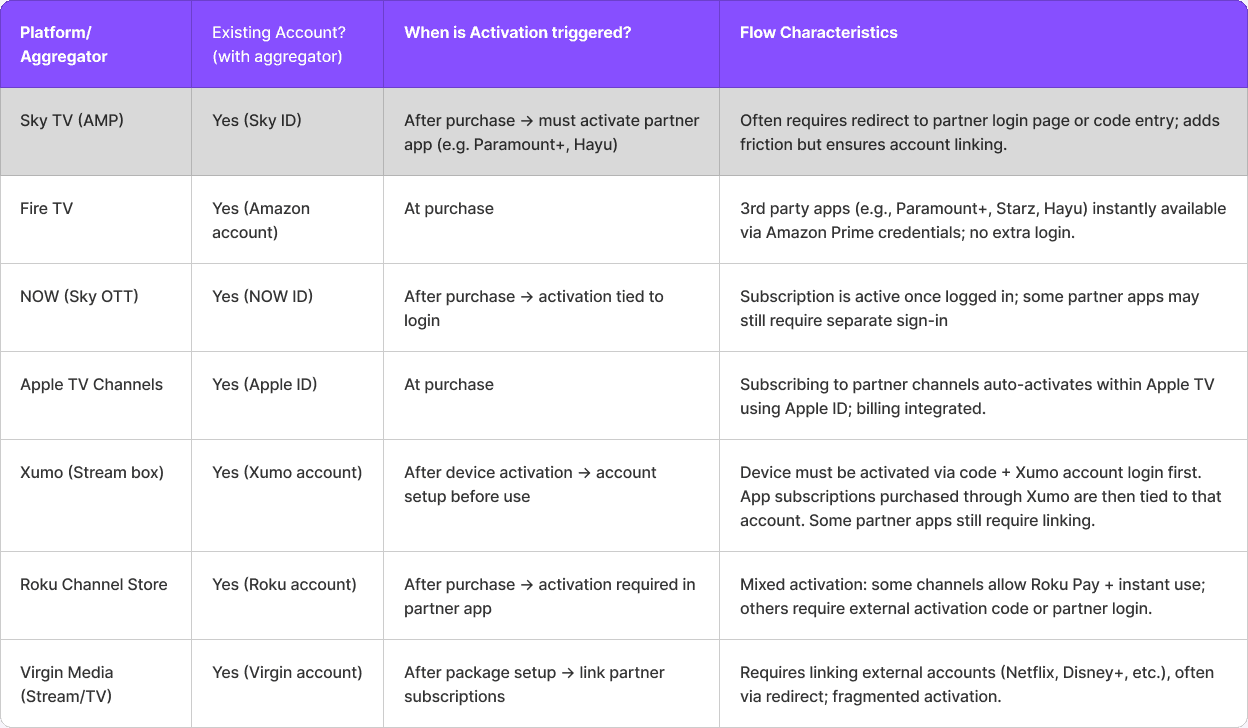
Patterns observed
• Seamless (Amazon, Apple): One account, one billing system. No additional steps.
• Semi-Seamless (Sky, NOW, Roku, Virgin): Purchases occur in-platform, but activation requires partner sign-in.
• Device-Coupled (Xumo): Device activation is mandatory upfront; high control, higher friction.
Implications for Sky
Sky currently mirrors the semi-seamless group; effective for partner compliance and identity, but at the cost of user effort. The Amazon/Apple model shows the competitive advantage of fully managed activation, while Xumo illustrates the risks of front-loading setup.
💡Opportunity: Sky customers already hold a Sky ID that comprises an email address. This could evolve towards an activation model that retains partner integrity but reduces unnecessary redirects, positioning Sky closer to the seamless standard.

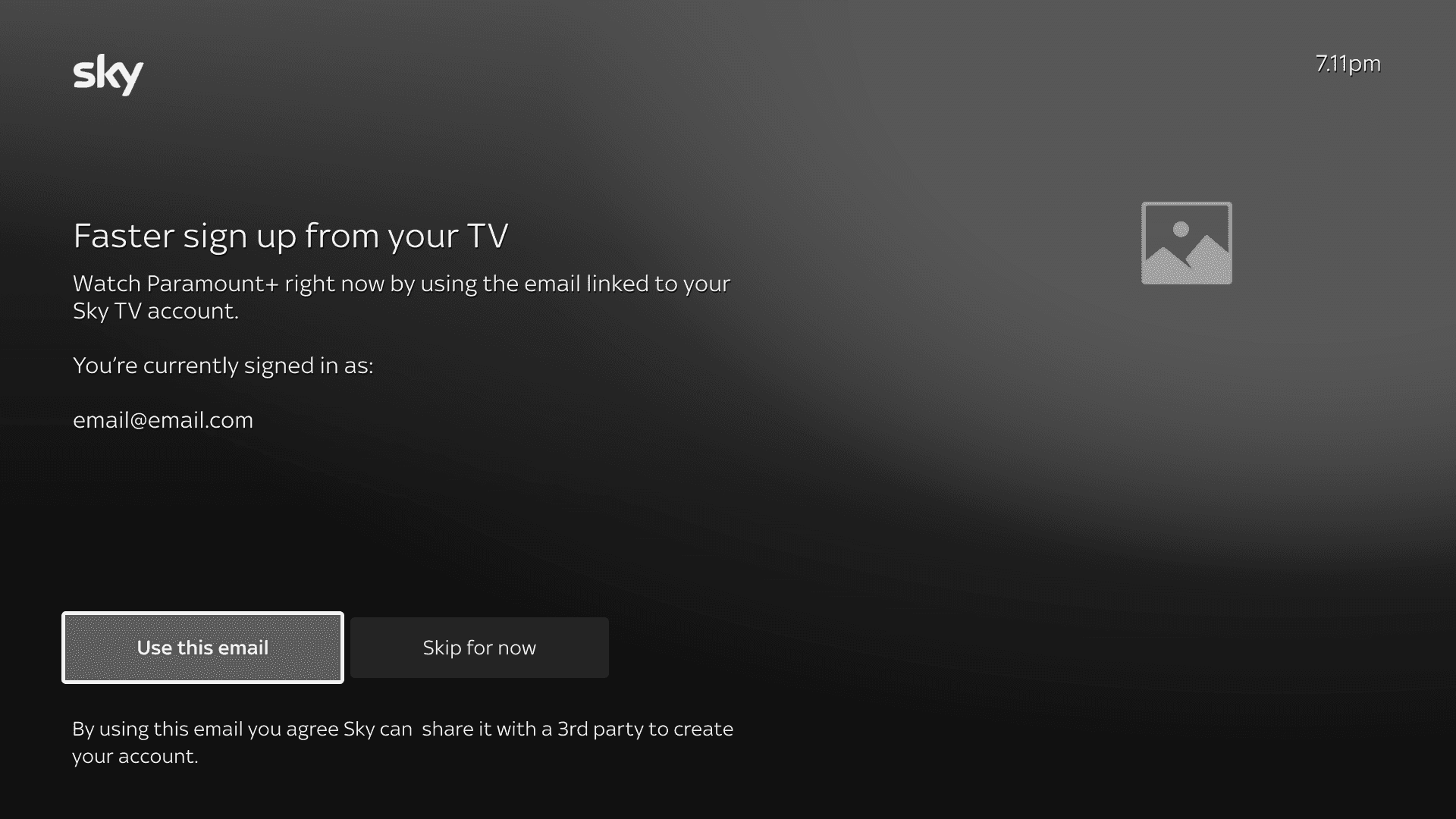
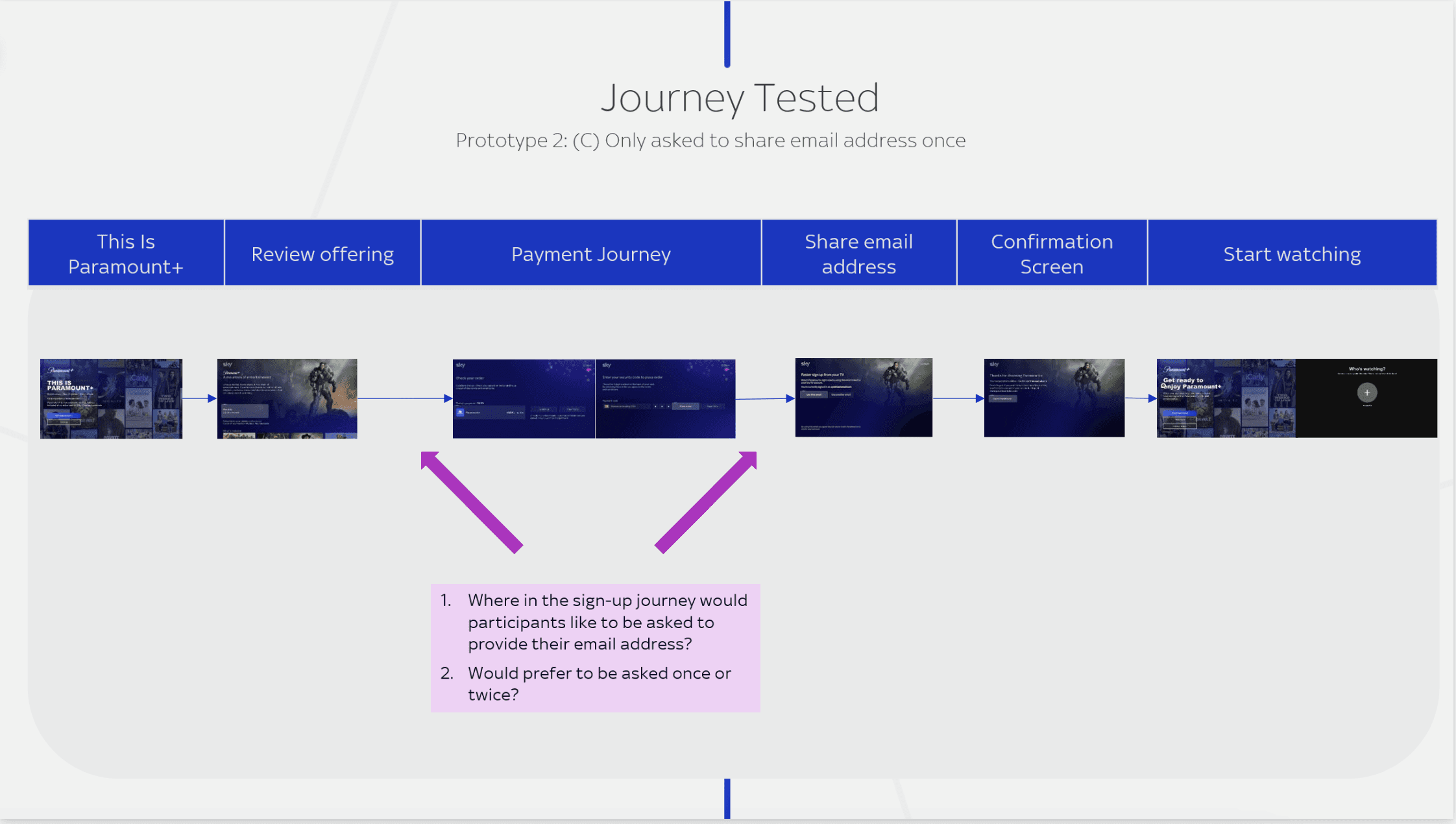
Prompt 1 to share email address
•Both CTAs allow the customer to progress to purchase
•"Skip for now" however triggers the 2nd prompt post
purchase
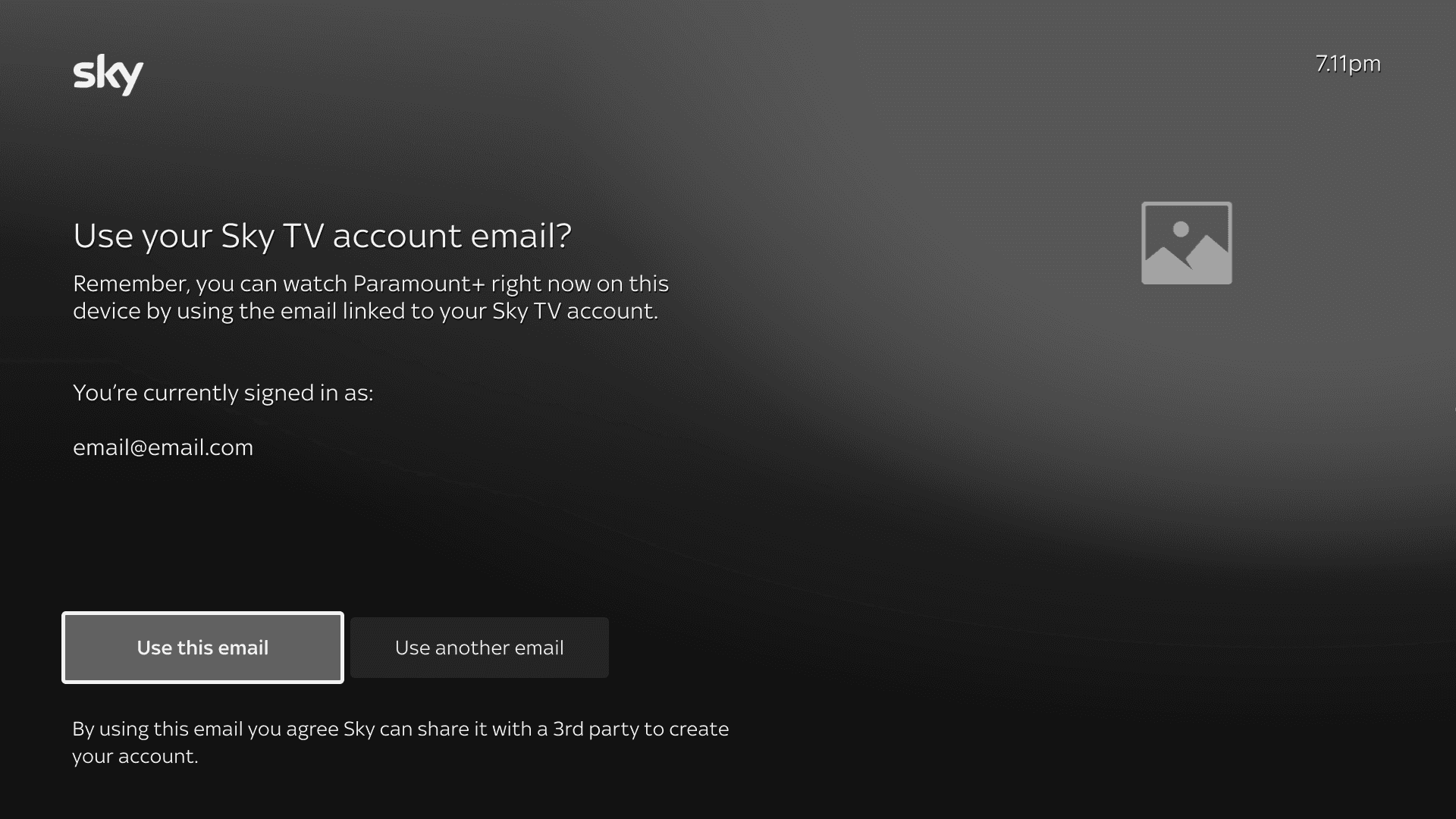
Prompt 2 to share email address
•"Use another email" activates the QR code route (current experience)
🔵Pros
• Reduces perceived friction; making account creation feel faster.
• Scalable for future Partners requiring more data (e.g. DOB, location)
• Minimises drop-off by letting customers proceed even if they skip the first prompt.
🟠Cons
• Weak mental model alignment: customers may not link Sky email input with account creation.
• Timing sensitivity: some users may be in a browsing mindset so not yet ready to share their details.
Proposal 2: Prompt customers to share their Sky email after purchase only.
Rationale: This aligns with the existing journey and reinforces the current customer mental model, reducing the risk of confusion or hesitation.

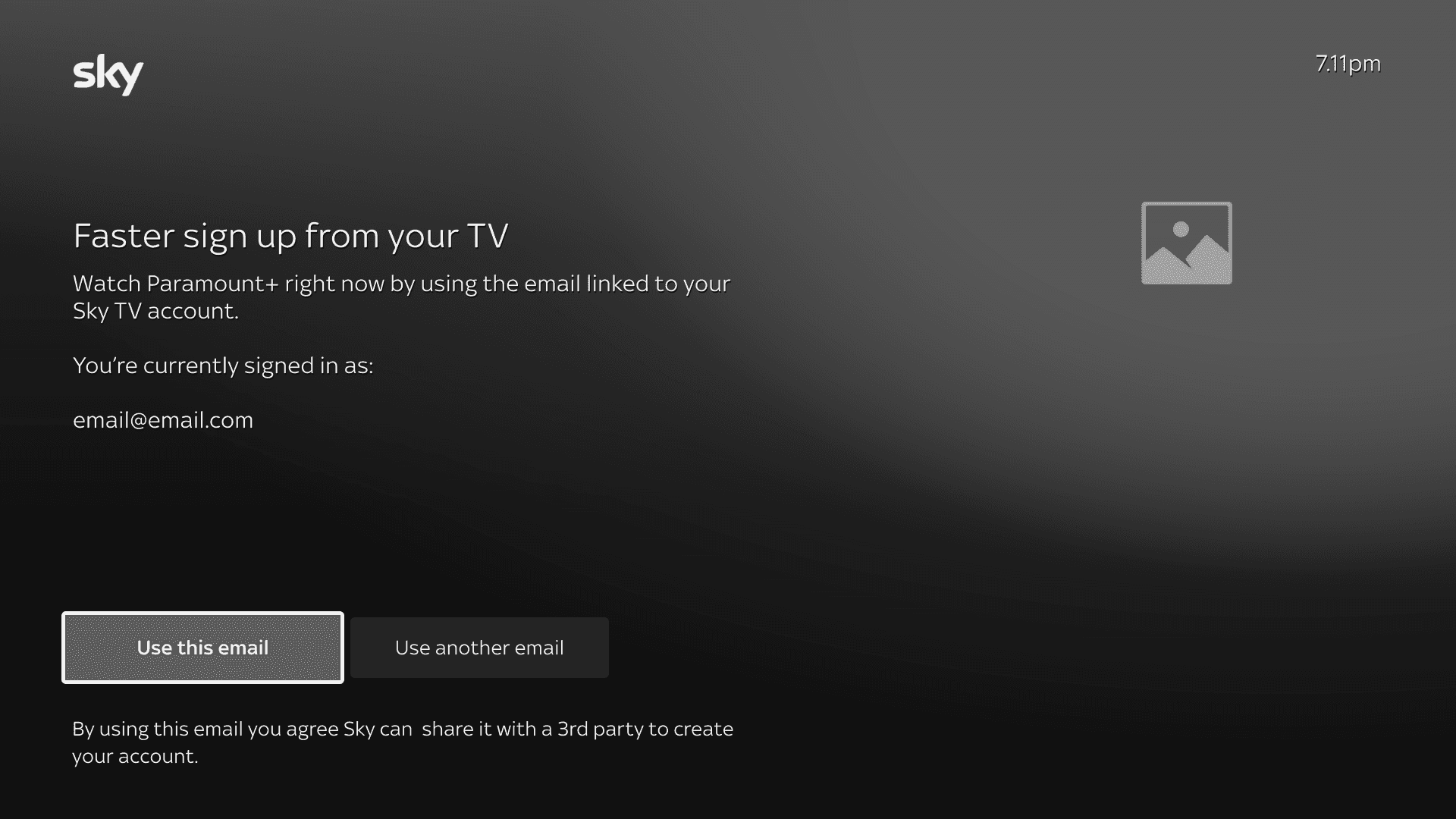
Customer asked once after purchase
•"Use another email" activates the QR code route (current experience)
🔵Pros
• Contextual timing: Asking after purchase feels more natural and relevant.
• Mental model alignment: Preserves the familiar EntOS and reduces friction.
🟠Cons
• Higher perceived effort: account creation may feel longer when delayed.
• Limited scalability: less suited for partners needing more upfront data.
Although Proposal 1 was favoured by Product for testing (due to its scalability for `future Partners needing more upfront data), I advocated for Proposal 2 as it better aligned with our "conversion-first" principle i.e. allow the users to experience value first before introducing friction.
Moderated User testing
Changes in our Research team meant there was a tight 10-day turnaround for recruitment and testing. This meant clear, transparent communication was critical.
To support this, I co-designed a cross-disciplinary UXR kickoff workshop; aligning the Researcher with our goals and refining participant recruitment criteria through collaborative feedback.
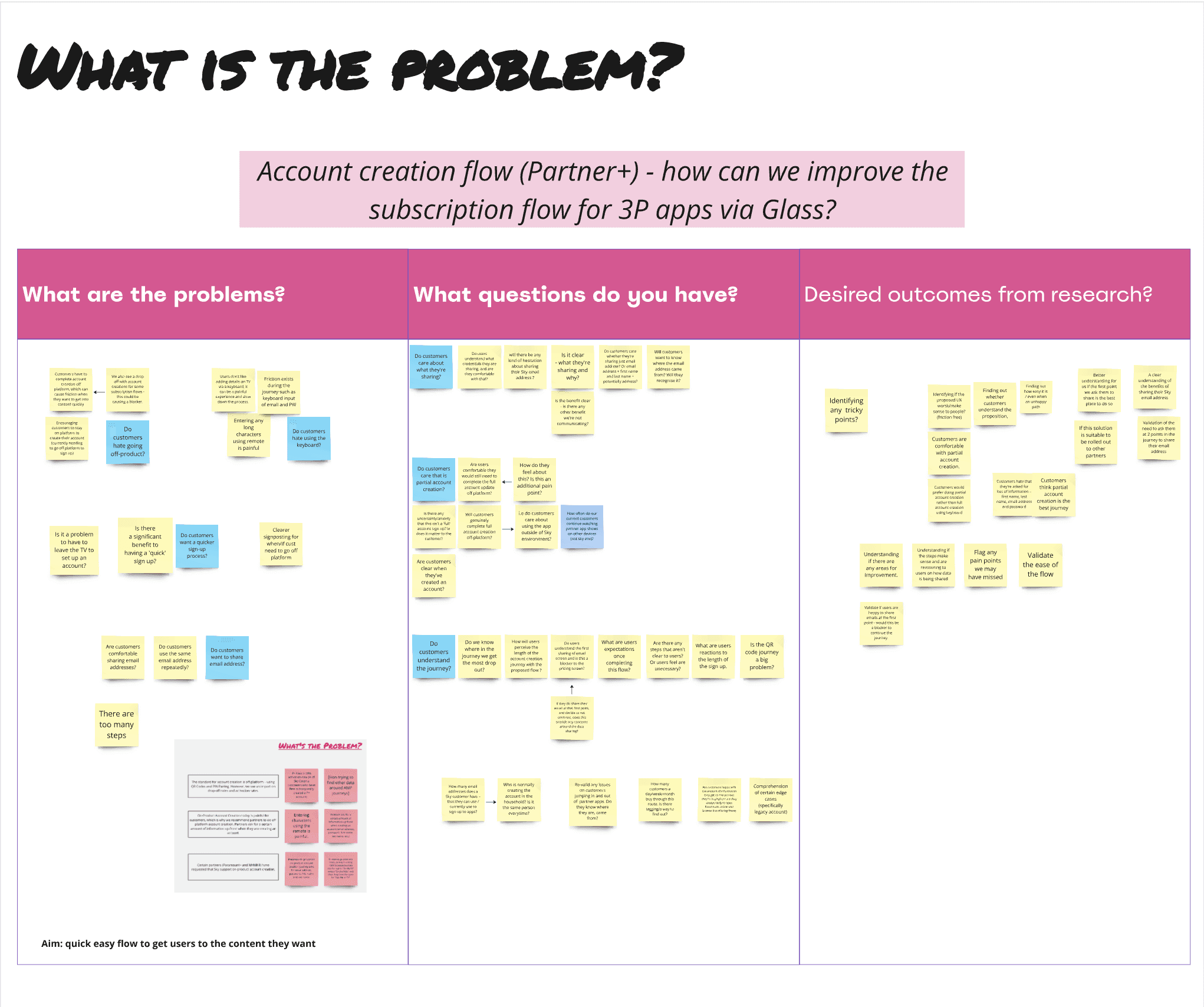
Based on this, the recommendation from Research was to also test both Proposals to validate our assumptions.
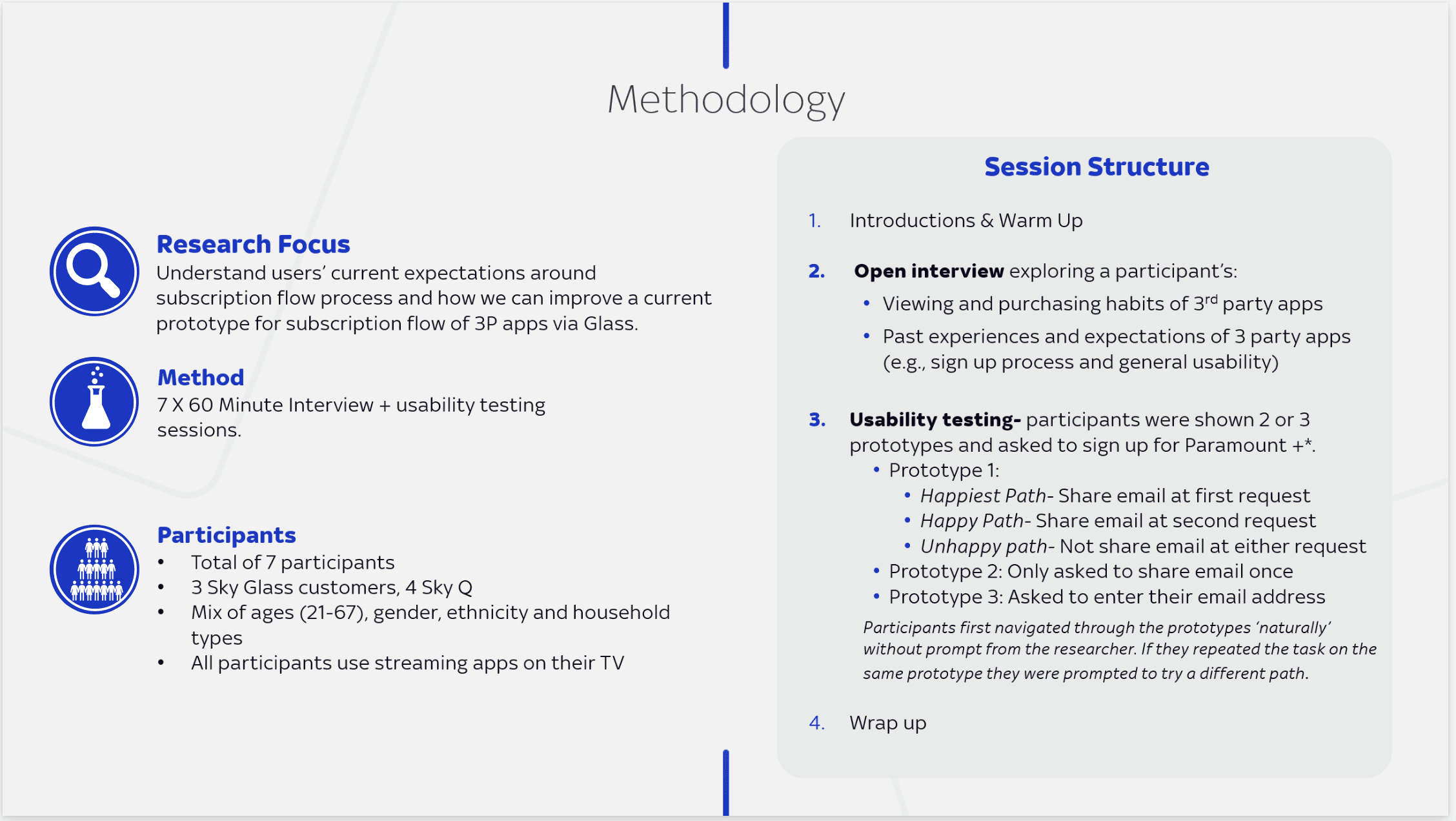
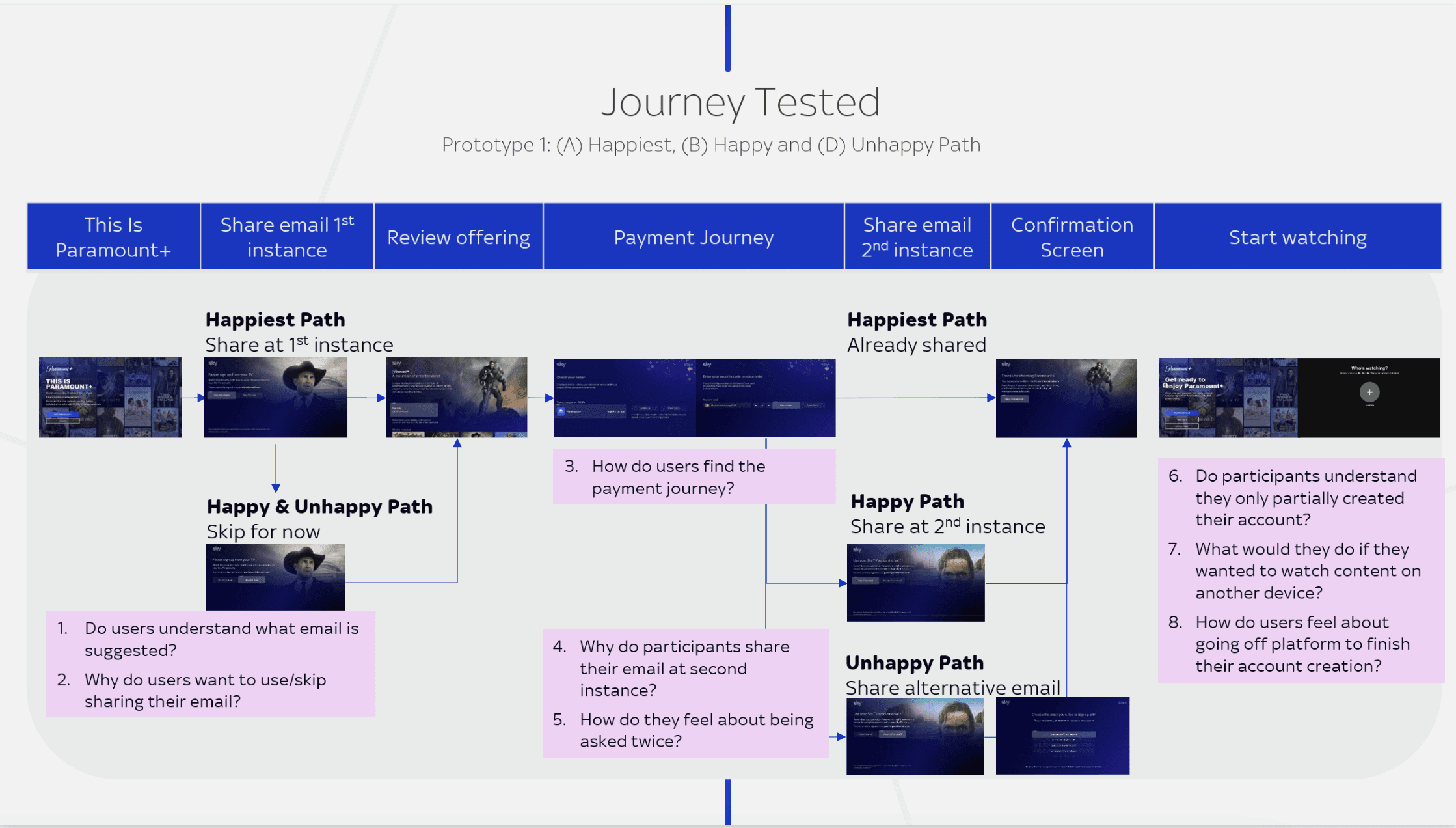
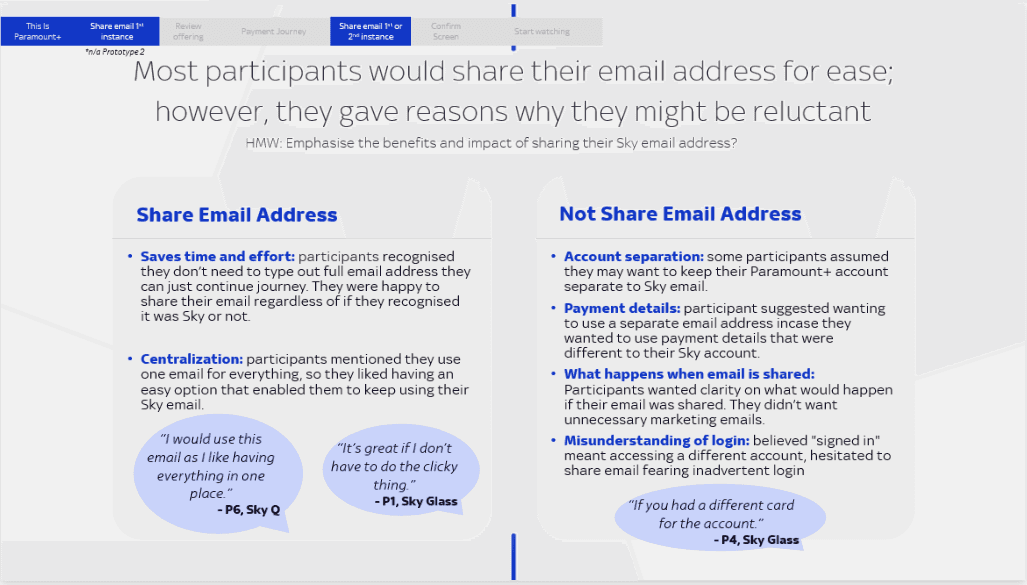
To share or not to share? 🤔 Qualitative method allowed us to explore more fully the motivations behind sharing decisions in the customer journey.
After initial synthesis into themes, I then ranked painpoints from most important to least important to help prioritise recommendations.
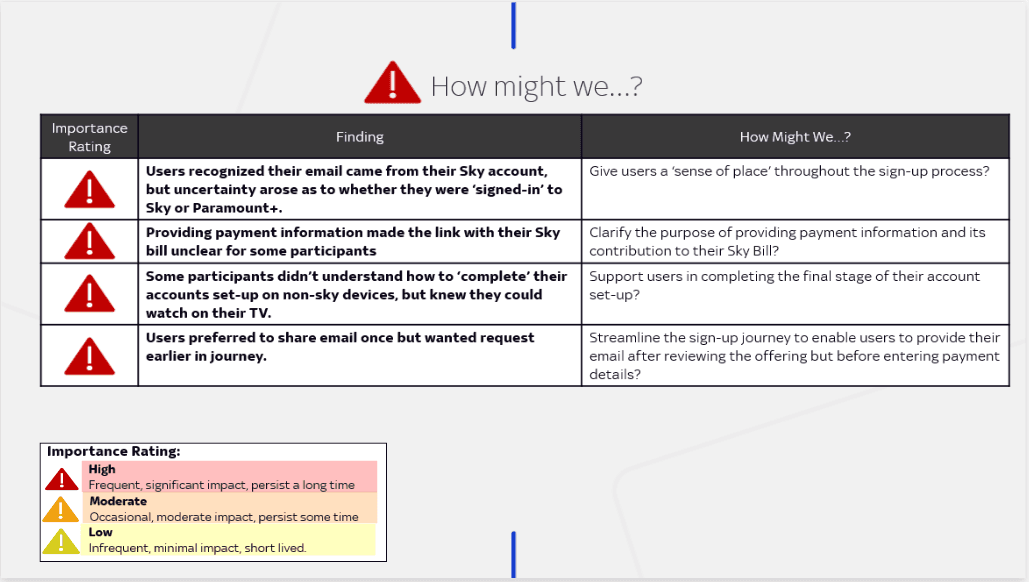
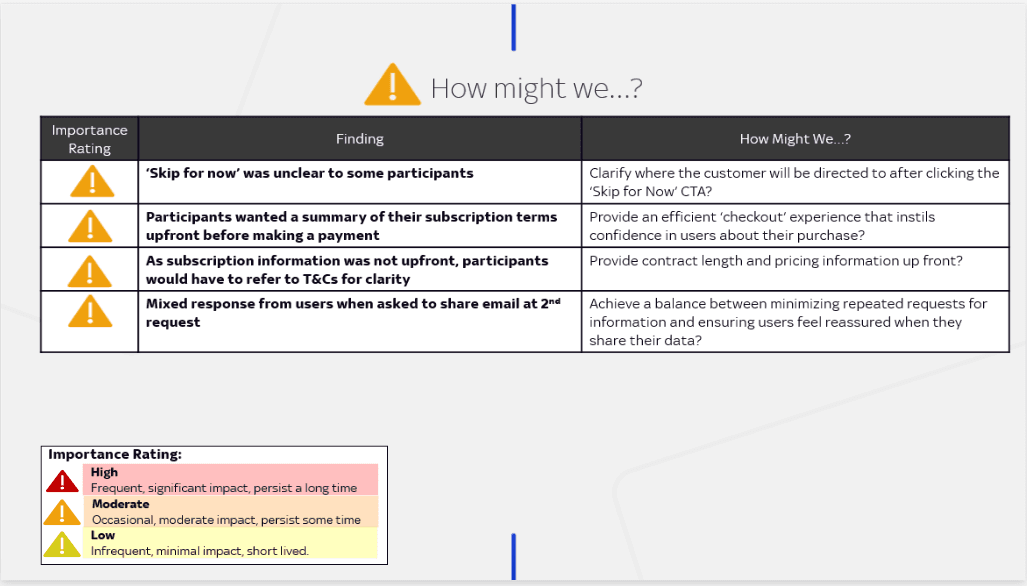
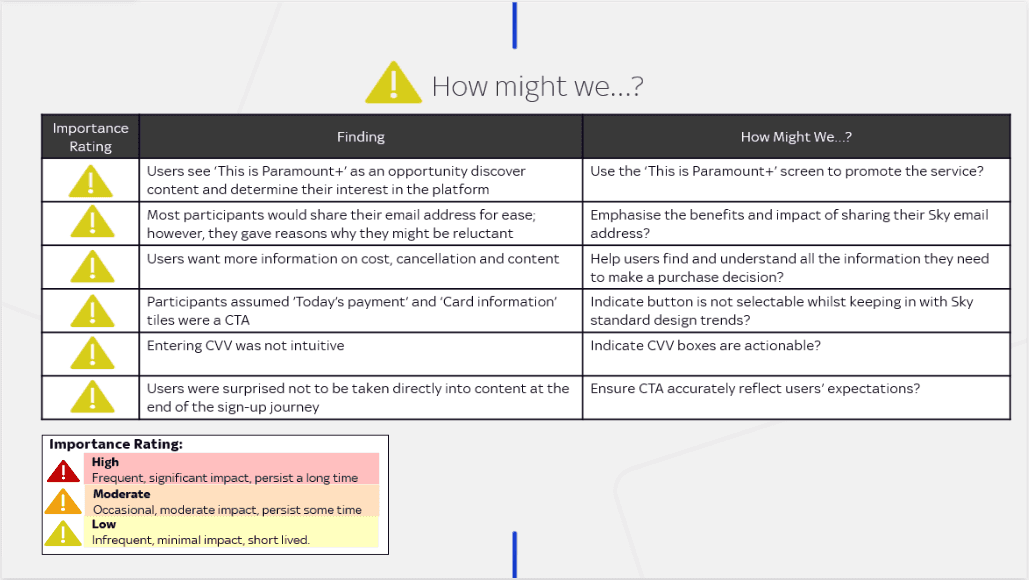
Executive summary across both journeys
• Account clarity was low: Participants were unsure if they were "signed in" to Sky or Paramount+.
• Most understood that the email came from their Sky account, but some didn't realise they'd still need to set a password for non-TV access.
• Participants preferred to share their email after reviewing the offer but before payment.
• There was a clear need to separate the purchase journey from account creation, both in flow and messaging.
• Reactions to a 2nd email prompt were mixed (some appreciated the confirmation, others found it repetitive).
Product and Commercial teams interpreted the research findings as indicating ‘acceptable risk’ in implementing Proposal 1.
However, I continued to advocate for Proposal 2, highlighting the potential impact on user trust and drop-off.
By aligning with Design and Product SLT, I was able to build support for a more conversion-focused approach.
As a result, the project team agreed to move forward with Proposal 2, prompting users to share their details post-purchase only.
🚨New Requirement Alert🚨
Post-testing, Paramount+'s legal team mandated an extra screen before content access to manage the account creation process.
We had already addressed this with carefully crafted copy, but I co-facilitated a workshop with the Product Manager to align on integrating the new screen while incorporating testing insights.
Balancing user insights with business constraints
Paramount+ were legally obliged to include this screen after a customer has consented to sharing their email address (screen on the left).
We had already managed this by presenting this success screen to the customer after they consent to sharing their email address (screen on the right) There is a duplication of messaging across both screens.
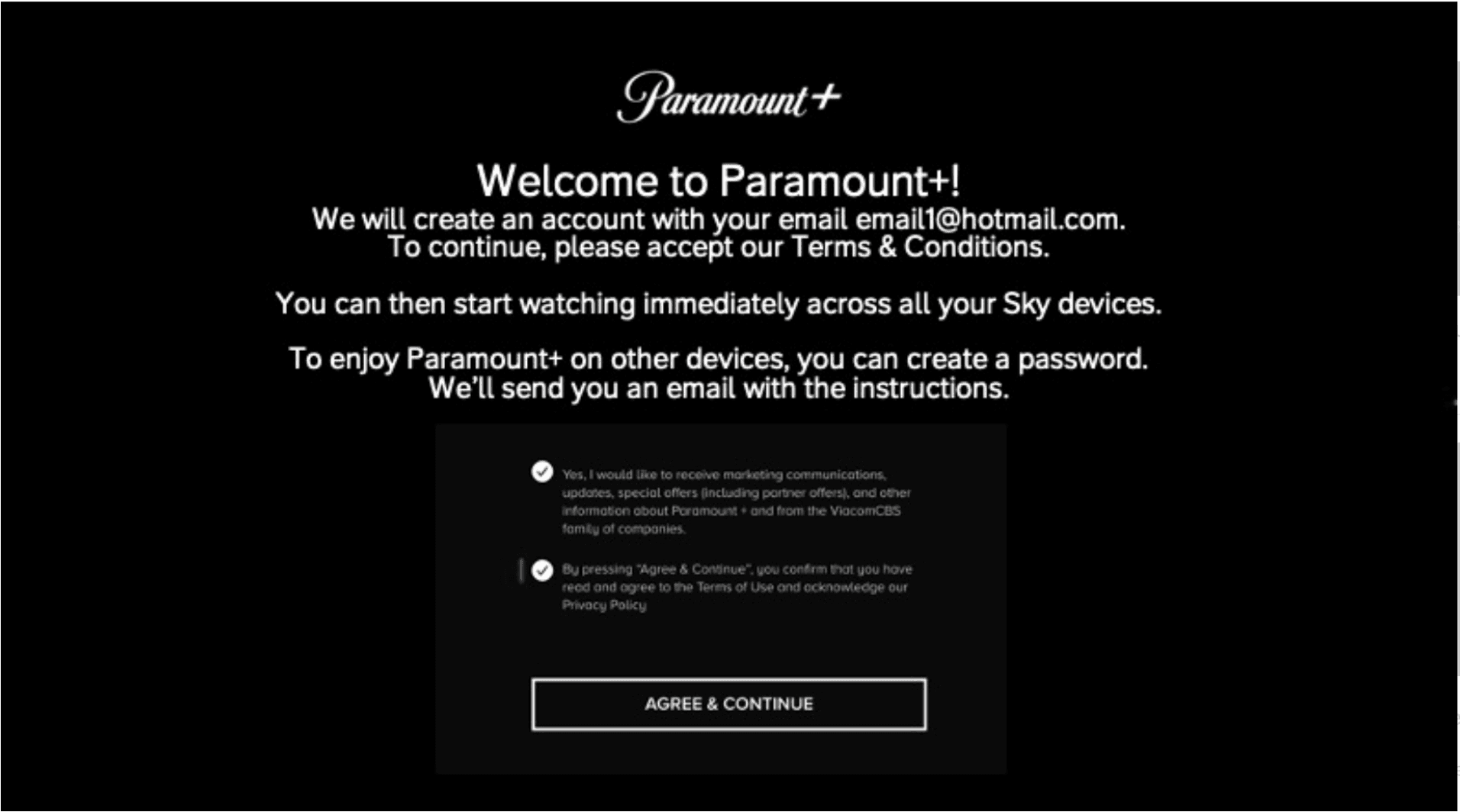
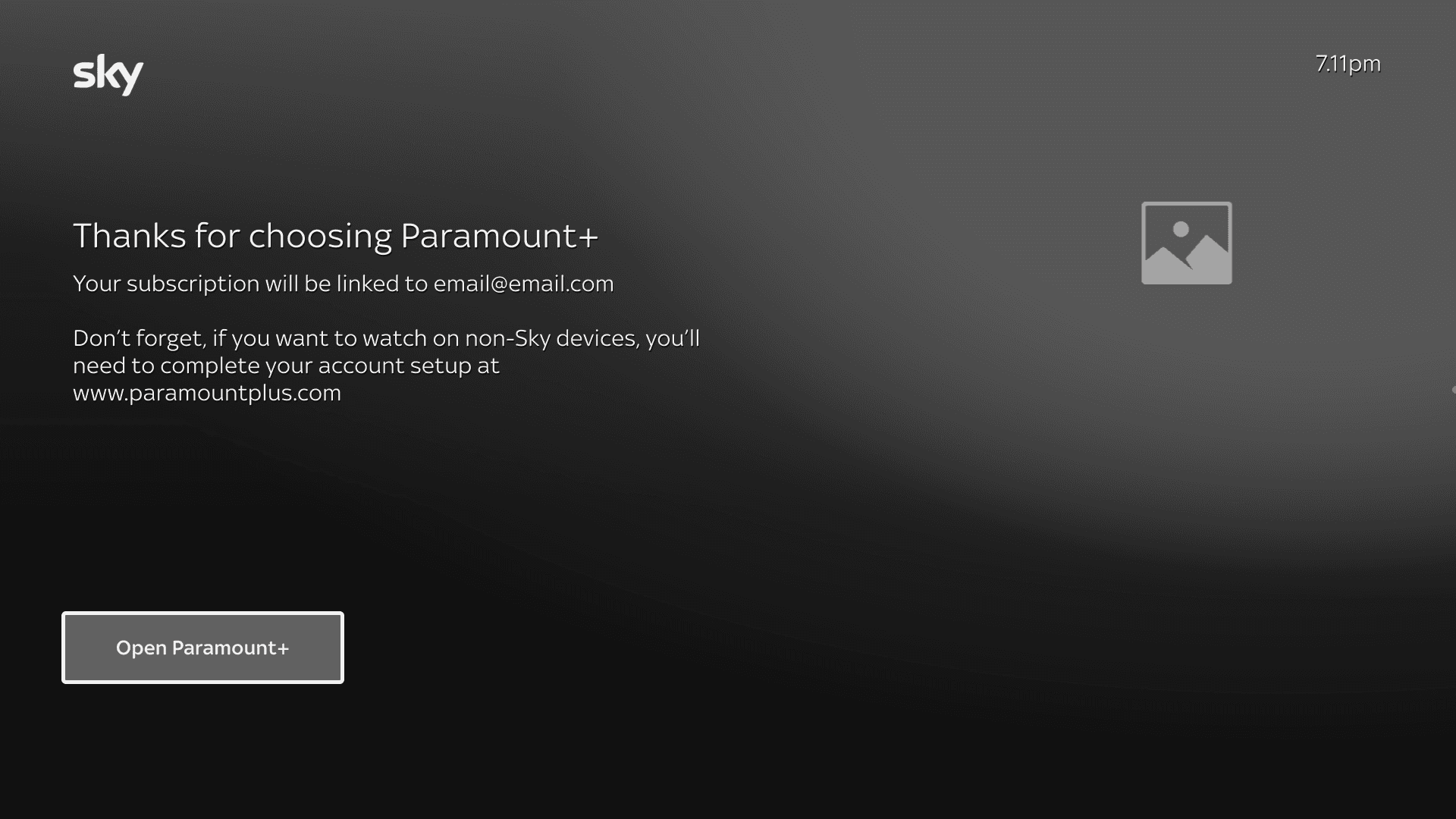
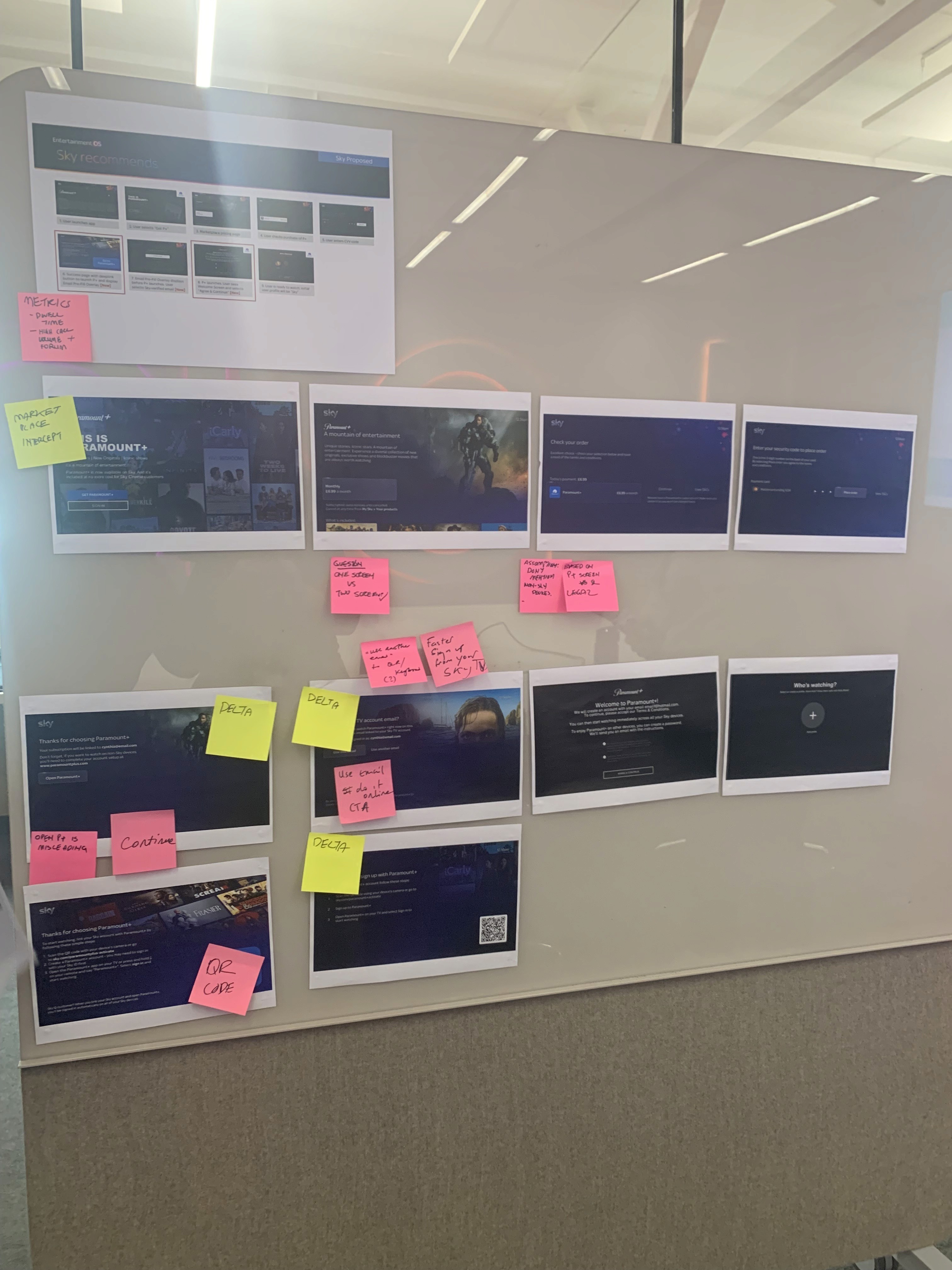
The post-testing workshop brought together Product, Design, Research and Copy (Engineering were unavailable) for a cross-disciplinary review.
Together, we identified potential changes to incorporate both the research insights and the newly mandated Paramount+ screen.
Participants wanted a clearer separation between purchase and account creation.
To balance this with Paramount’s new legal screen, we refined the copy on the account creation prompt creating a more contextual flow aligned with user need for clarity.
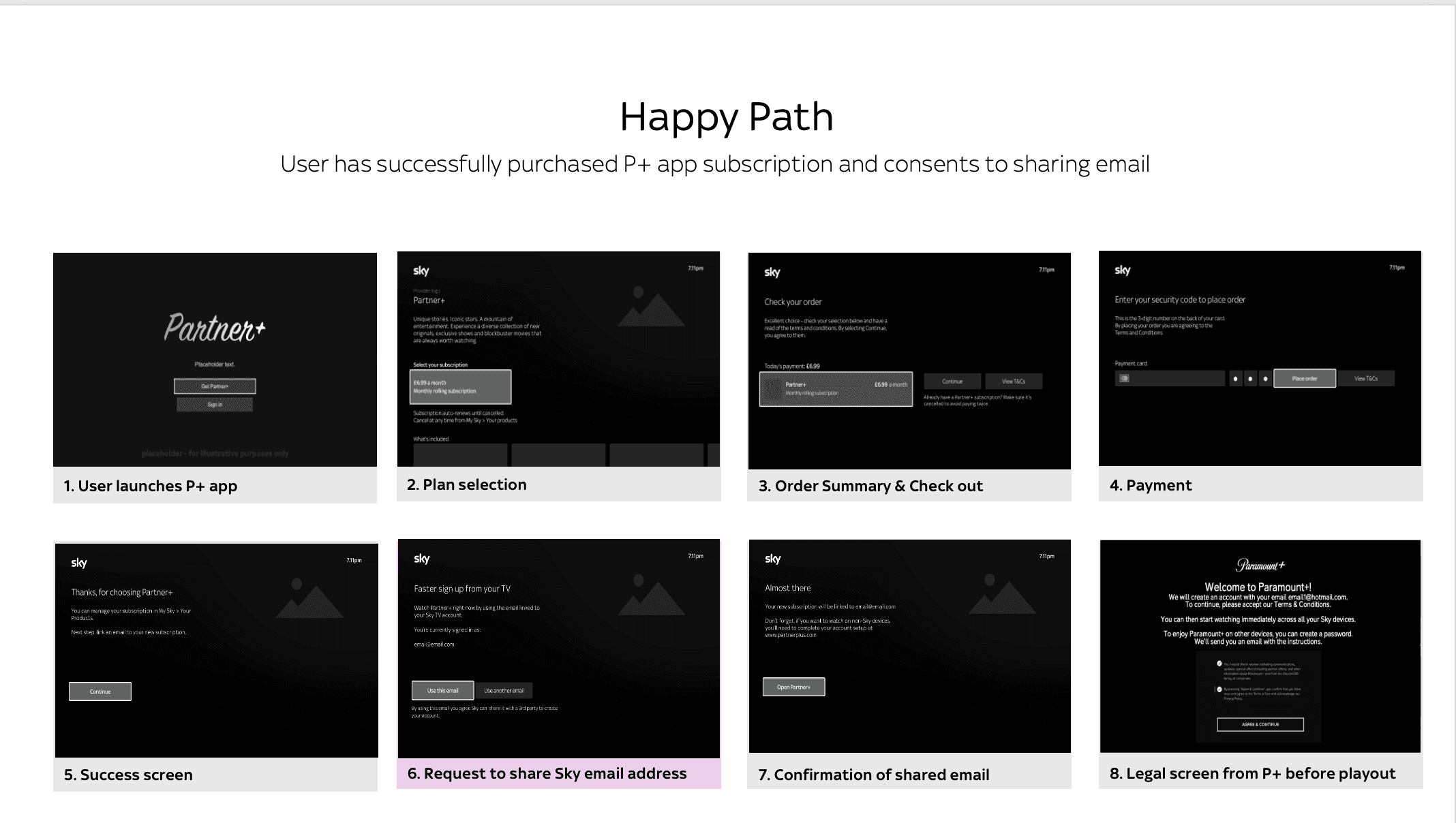
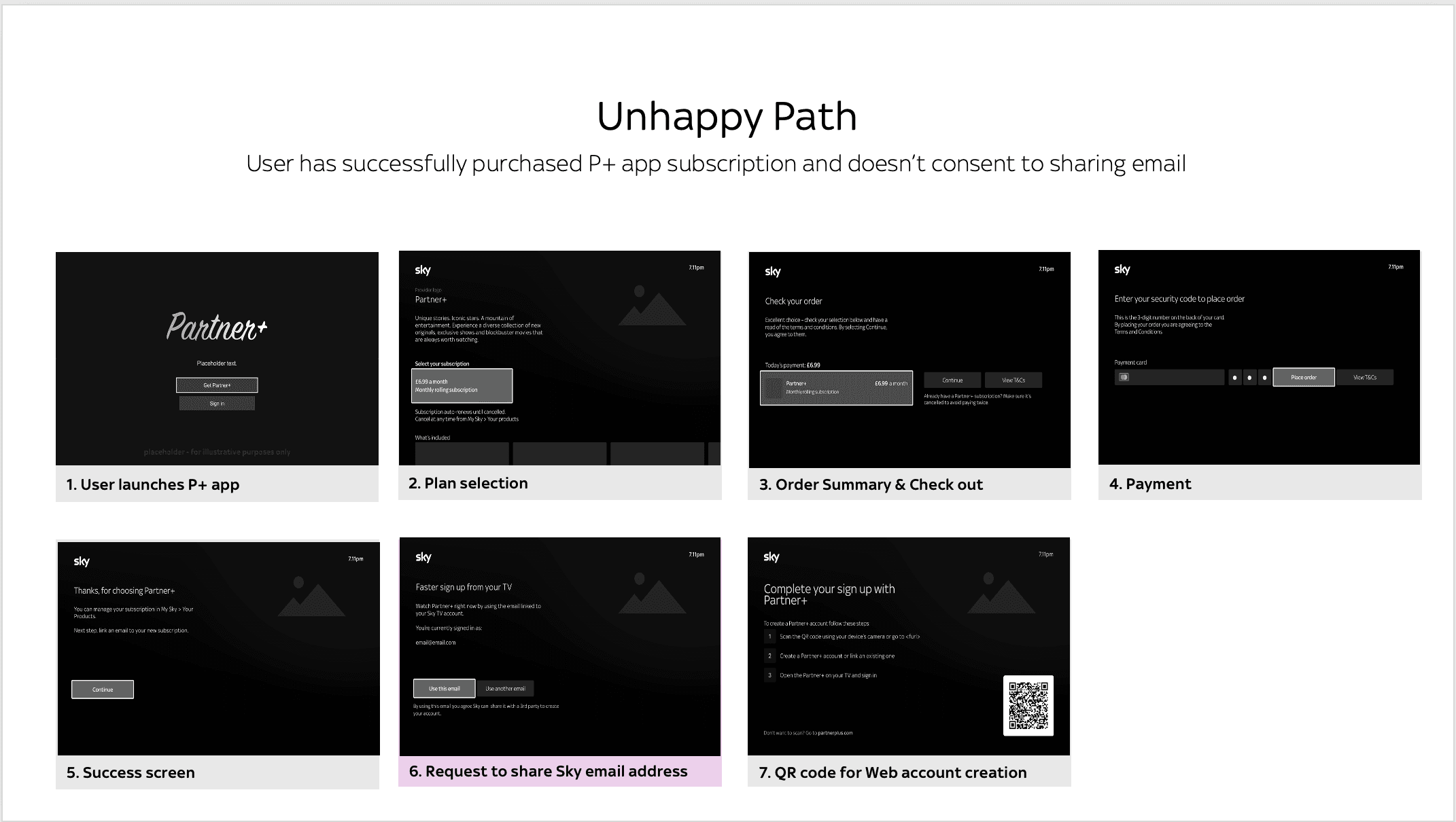
Demo of the new experience
Beyond Account Creation - Some future thinking
Activation Framework
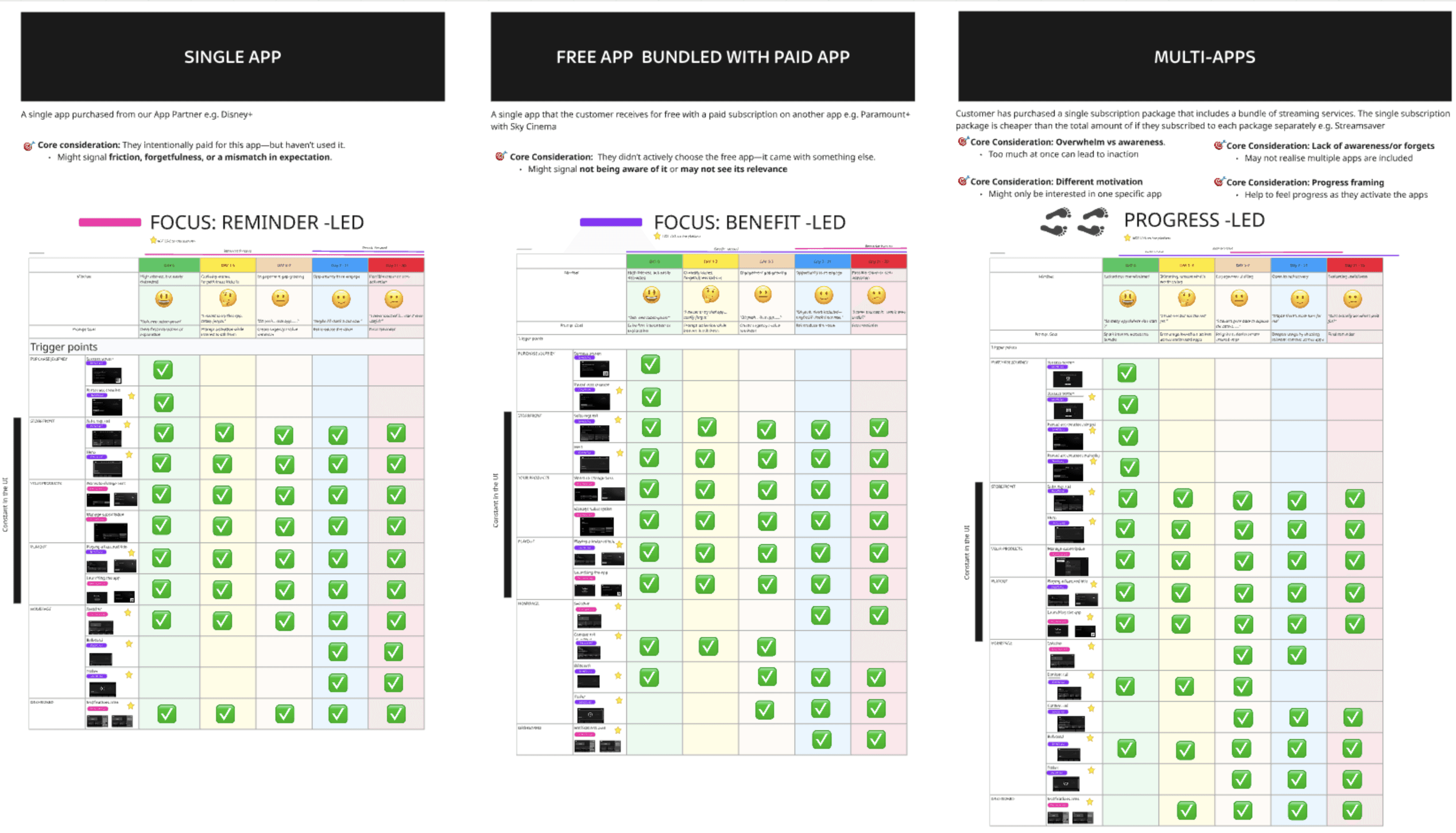
While this project streamlined activation at purchase, the greater opportunity lies in sustaining engagement post-purchase.
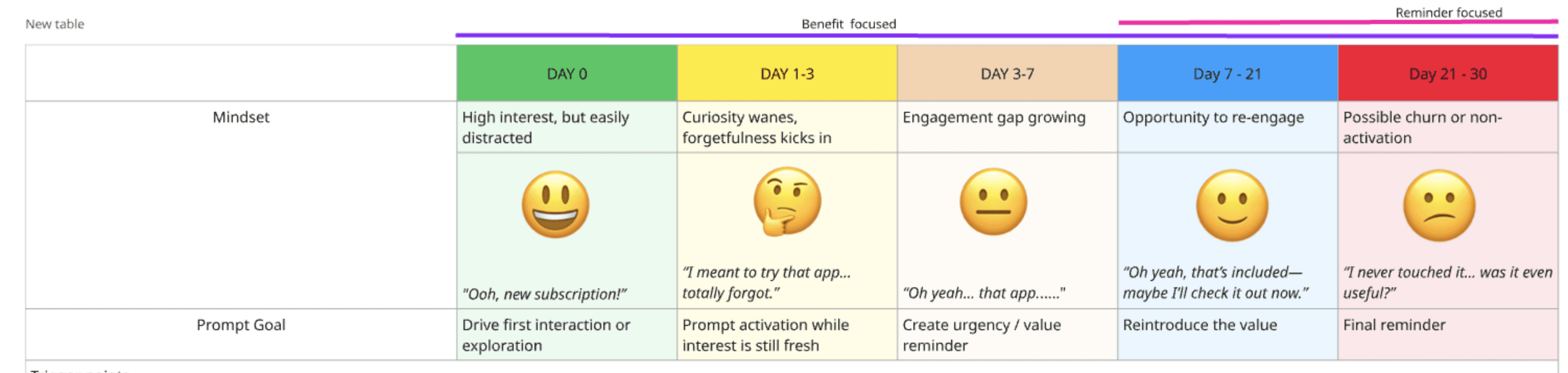
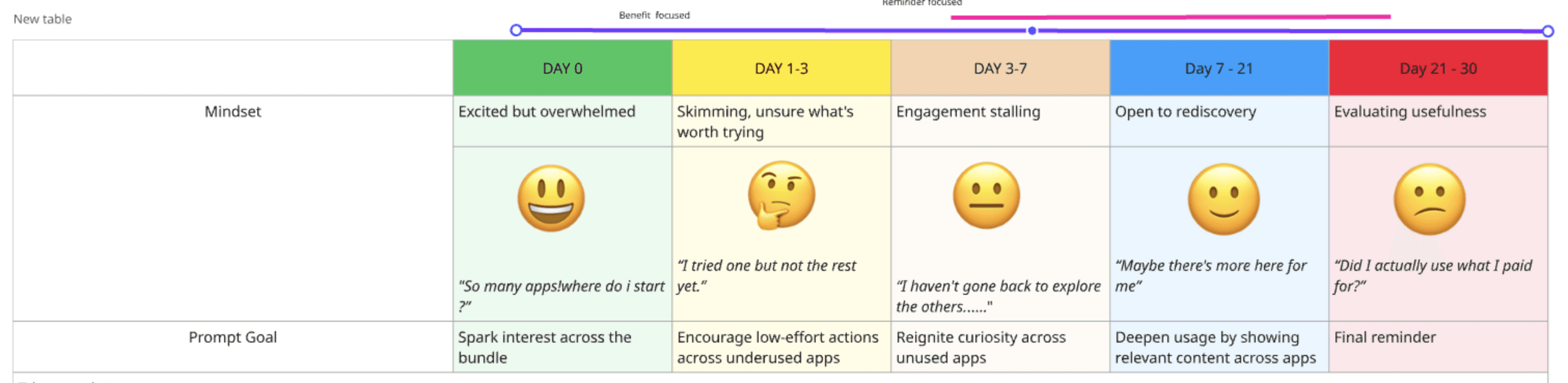
Delayed activation erodes perceived value by the customer and also retention, so I created a framework defining when, where, and how Sky could deliver supportive, action-oriented nudges to activate. I considered the first 30 days of non-activation.
Key Scenarios
• Single Paid App Activation
Context: A customer pays for a standalone partner app such as Hayu but may not activate due to friction, forgetfulness or mismatched expectations.
💡Future opportunity: Use timely, value-led prompts to highlight the unused benefit e.g., “Your Hayu subscription is ready - start streaming now.”
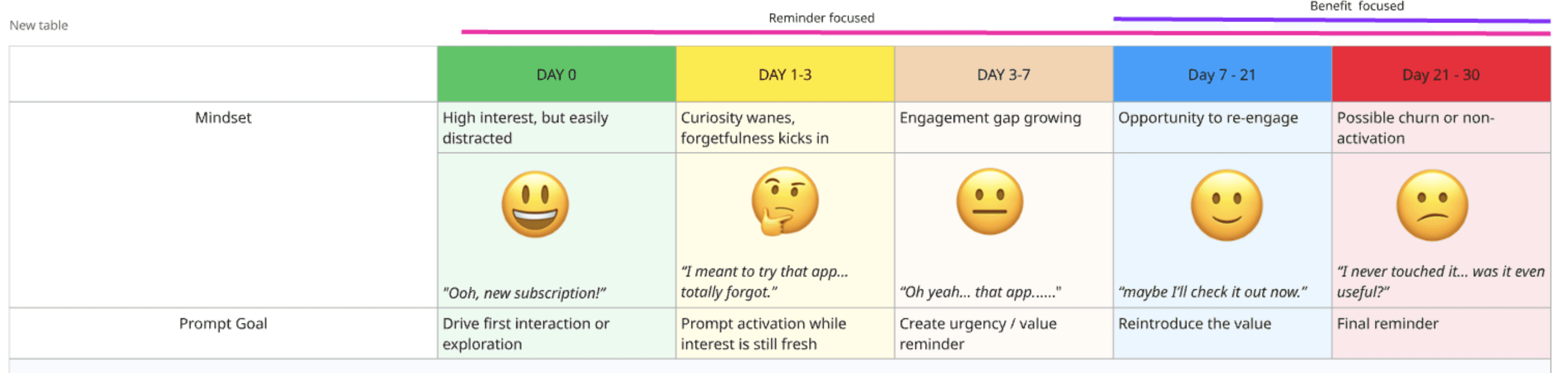
• Free Bundled App Activation
Context: A customer receives a free partner app as part of a TV Pack (e.g. Sky Cinema/Paramount+). They may not be aware of the free app or find it relevant.
💡Future opportunity: Reinforce ownership and missed value e.g., “Paramount+ is included in your pack - activate today and explore your library.”
• Multi-App Activation
Context: A customer purchases a bundle including multiple apps (e.g., TV Pack + 2 partner apps). Activation can feel overwhelming
💡Future opportunity: Reframe activation as progress driven and/or gamified e.g “Activate your apps and level up your experience.” reducing cognitive load and streamlining the process.
Design Considerations
•Timing: Balance immediate prompts (right after purchase) with delayed reminders (when usage hasn’t occurred).
•Framing: Use benefit-led language as well as reminder-led cues depending on context.
•Channels: Explore in-TV intercepts, My Sky app notifications, and email reinforcement to ensure consistency without overloading customers.
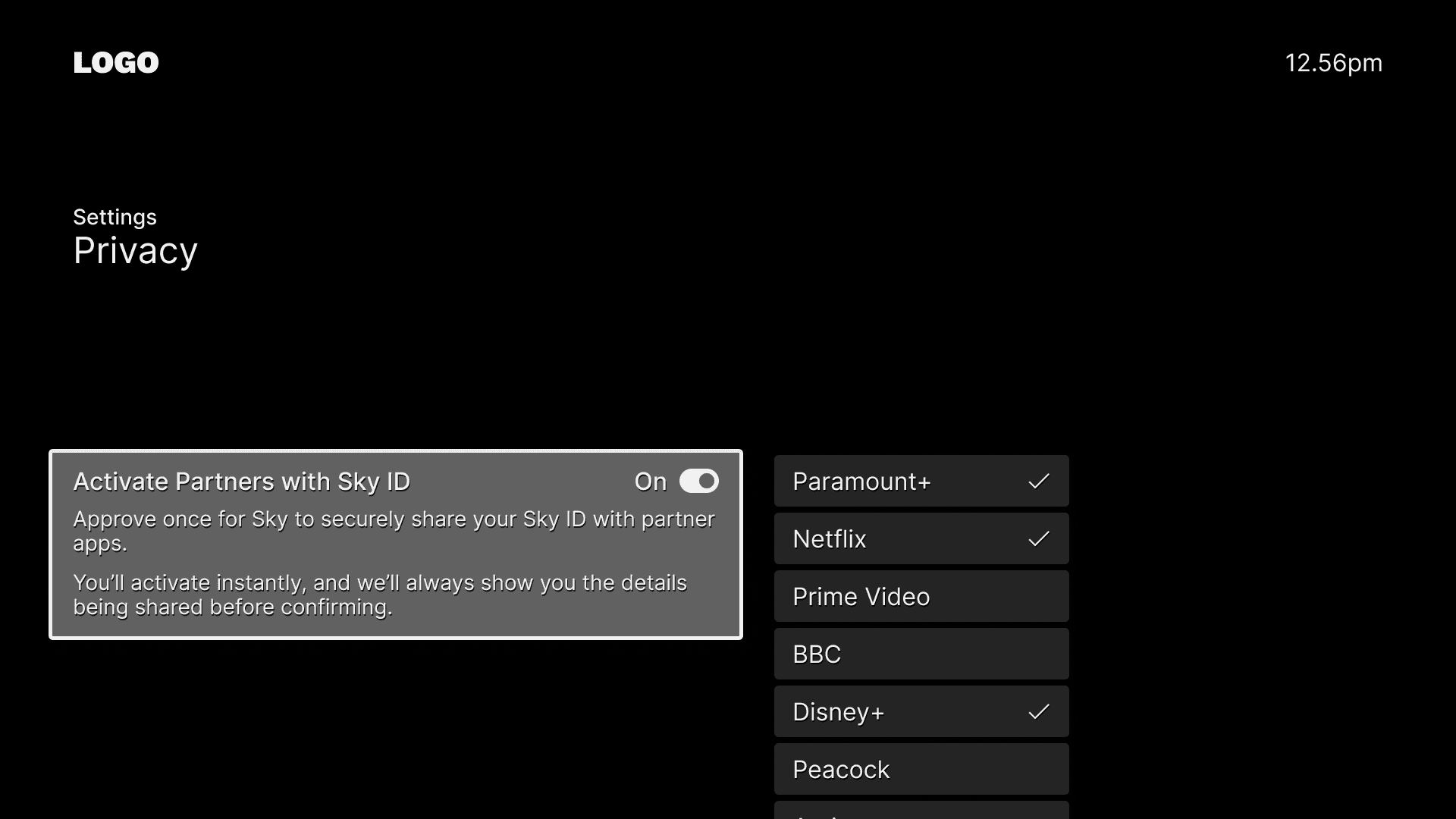
Blanket Approval Mechanism
I also saw an opportunity to let customers approve the use of their Sky ID details across multiple partner services so activation feels seamless.
Reflection
With limited Research capacity, I took a more active role in user research. This was a welcome opportunity that brought me closer to users and deepened my understanding of their needs. Tight timelines sharpened my stakeholder management, helping to maintain alignment and momentum throughout.
Key takeaways
🔑 Balancing internal teams and external partners (e.g. Paramount+) required transparent communication, which built trust and guided stakeholders to a unified outcome.
🔑Learned the importance of balancing user insights with business and legal constraints; designing flows that protect compliance without compromising user needs